Showing posts with label Module Reviews. Show all posts

Monday, 25 April 2011

Cascade Failure Public Beta: A Review

Cascade Failure: the new OSR sci-fi beta from Greg Christopher of Dark Horse Games (downloadable FREE here). Now at the top of my “to play” list and well worth a look. While the current release is merely the first “beta' version and has a long way to go before becoming a fully rounded, finished product, it already promises to become a real gem of a sci-fi game.

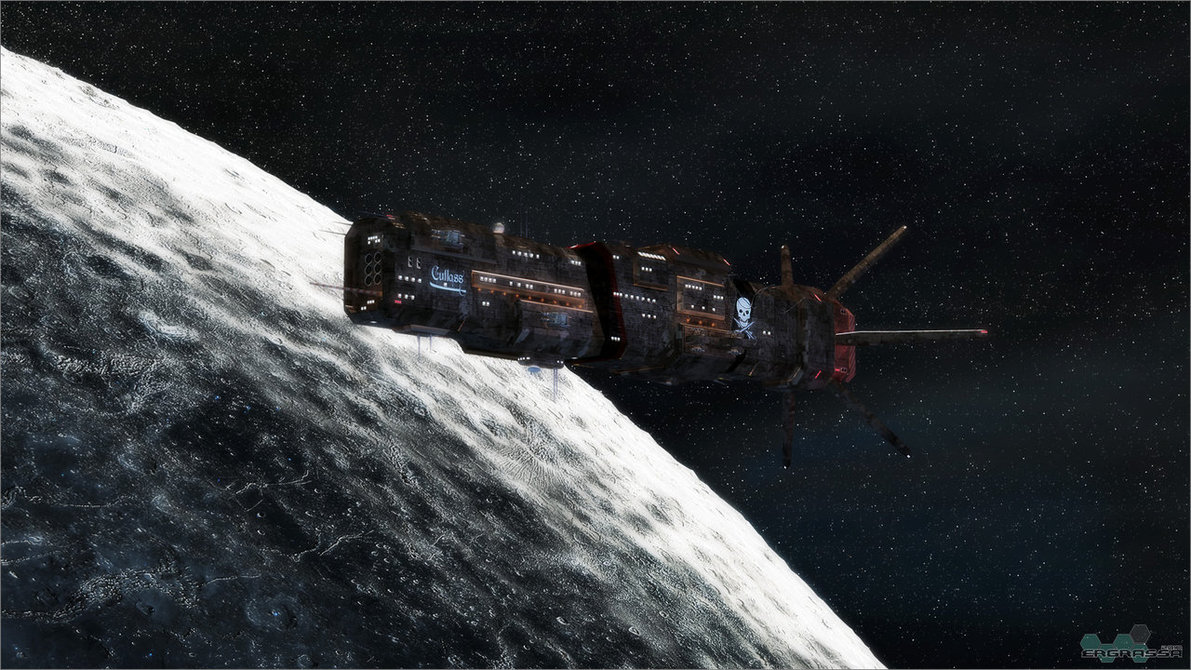
The first factor that sets this game apart from it's competitors is it phenomenal and highly evocative artwork, which easily captures the sense of a post-collapse high-tech society on the brink of utter catastrophe. While the artwork alone is reason enough to give this game a look, and sets a high bar indeed for expectations of quality, the rules system itself more than lives up to the promise of the artwork.

Character creation follows the standard D&D format, but with a wider range of classes available than normally appear in OSR D&D science-fiction adaptations: that is, beyond the usual tech, solider and psychic class options. With eight classes to choose from (including a variety of tech and combat specialists and two psychic classes) each with their own distinct class abilities and team niches, ample options exist to differentiate one character from another. This diversity of choice is further supported by the ability to acquire 'Gifts' for your character as they progress in level (one of the few 3rd ed D&D developments that I ever actually rather liked). Thereby ensuring that no two soldiers, outlaws or slicers need ever be mechanically the same.

Racial options are also attractive, with some of the best (and simplest) rules depicting A.I (“Droid”) characters that I have seen in recent years. The Alien species presented as PC races in the beta are also excellent, featuring outstanding racial descriptions and traits that (for the most-part) will help players portray a true alien psychology as opposed to the all too common “man in a rubber suit syndrome”. No “space-elves” or 'space-dwarfs' for us here, though one or two races have similar elements of psychology or culture in their make-up.

Like many D&D clones Cascade Failure includes an alignment system, but one less restrictive than that found in many systems. Combat, on the other hand, uses an ascending AC system designed to represent how difficult it is to injure a target rather than to actually hit it. The injury system is an elegant and surprisingly obvious way of balancing the traditional acquisition of more hit points per level with the deadliness of science-fiction weapons. As with the old D20 Star Wars system (which Cascade Failure improves upon) hit points do not represent how much injury a person can withstand but rather how good they are at dodging out the way. Hit Point damage reflects a combination of near misses with bruises, aches and physical fatigue acquired from close calls and throwing ones-self about the place to avoid been hit. As any modern soldier will tell you, it's more difficult to score an effective hit on an experienced opponent in ranged (or for that matter, melee combat) because they make better use of cover and are generally more willing to inflict bruises and minor injuries on themselves by diving onto rubble and throwing themselves about the place than a novice is.
Where Cascade Failure improves upon the old Star Wars injury system is that, rather than losing 'wound points' after reaching zero hit points, in Cascade Failure you begin to take ability damage. This reflects the character taking a serious wound (or wounds) that would normally put him out of action. This temporary ability damage can be recovered with successful medical treatment, but a time window exists beyond which medical treatment would prove ineffective and the ability loss becomes permanent. Droids take damage in the same way as organic characters except that the ability damage is never permanent and can always be repaired when sufficient spare parts are available.

Like any beta, the existing version of cascade failure does have it's flaws. There are the usual handful of rules omissions that slip through proofreading that can be fixed with the application of house rules or a little common sense until the next version is released (or until they are officially errata'd). Likewise, the present vehicle and starship rules are sparse to the point of being non-existent (I'll be using the ones from Stars Without Number until the ones for Cascade Failure and properly developed).

The (optional) setting material provided, is first rate,with a number of intriguing factions and alien races provided. The default setting (of which the artwork is highly evocative) is of a post-collapse hi-tech society with a failed economy and a growing scarcity of resources ranging from population-base to hi-tech skills and materials. However, while the rules system supports this setting extremely well, the rules themselves are highly adaptable. I was immediately struck by how easily the rules could be applied to such diverse campaign settings as the Firefly, Babylon 5, Star Wars, Aliens, Mass Effect and even Terminator universes. Or any other setting (home-brew or otherwise) for that matter.

If the beta is anything to go by (and believe me when I tell you that it is) then the full version of Cascade Failure is set to be an absolute gem of a rules system. I already intend to start a new game using it (I'm already working on a sector-scale sandbox and background storyline) and that is the highest complement for a rules system I know. True, there are gaps in the present rule-set, some glaringly obvious ones even (such as the aforementioned virtual absence of starship/vehicle combat rules). But, even with-out the presence of working vehicle rules, there's enough rules material and setting information contained within this 88 page beta to make for a very exiting, very enjoyable and, indeed, very playable sci-fi retroclone. I can't begin to tell you how excited I am by this product.

Look out for an actual-play report  and some sand-box articles soon.

Dangerous Rating: 8.5 out of 10.

Note: The Artwork used in this review was been donated to Dark Horse Games by the respective Artists for use in the Public Beta. The art has been reproduced here without permission.

Tuesday, 16 November 2010

Digging the Sandbox: The Jade Hare, Temple of the Ape and Idol of the Orcs.

J-1 The Jade Hare is a fairly standard “rescue/retrieve” module for low level characters. In the module itself, the Idol has been stolen by a wizard and his goblin followers, taken from a small village. At just ten pages long it's a short module, with a small dungeon that a typical low level party might manage on a single trip, and otherwise sparse on setting details, making it easy enough to Transplant into any campaign. The character and location names have an eastern feel, but this is easy enough to change on the fly.

Which leads us to the issue of how easily the module can be converted to the Hyborian Age. There aren't many settlements in the Barachan Isles outside of Tortage, with the exception of Pictish Villages. However, in the Age of Conan game it appears that while slaves are (obviously) not illegal in Tortage, escaped slaves are. In fact, escaped slaves are simply not allowed into the city and must face exile. I imagine that these former slaves are themselves, in fact, something of a target for slavers. So I shall rule that a small band of ex-slaves have long since banded together to form a small village not far from Tortage, deeper into the mountains and protected by stout stone walls for protection. They may even trade with the city itself from time to time, providing it with some essential local items such as meat, furs, hides and so on.

We shall rule that the Jade Hare was stolen from here. I'll also use the village as the base location for other, similar adventures in the same vein. By which I mean modules that require that the party assist a village. The villain of the peace is an easy one: he'll become a Stygian sorcerer, perhaps either in service to another, more powerful sorcerer on the island or else a runaway apprentice out to make a name for himself. Once again, the goblin servants will become a bunch of Picts and pirates, change the desert setting to a desert island and we're ready to roll.

So this module gives me two locations to add to the Sandbox: the Slave tribe village and the Dungeon of the Mad Warlock. I'll leave off a decision on where to put these just yet. Chances are they will go on the main island, but lets see what we get from the other modules first.

This leads us to the Temple of the Ape Module by RC Pinnell. At 15 pages long it's also a nice, short module which any given party should easily manage in a short session. However the first 6 pages serve as an introduction to Old School gaming and rules. The Premise that the party encounters an island village of beautiful women, with no men. These woman are refugees from ancient times (in my campaign, I'll say they are descended from Atlantis or the Acheronian Empire) and are protected by wise-women and man-apes. Yet the villagers have heard little from either in some time and now the head-hunting local hobgoblins (Picts again, in my campaign) are starting to encroach on the villagers traditional territory. Que a quest to find out whats happened to the man-apes and wise-women.

It's a nice enough little module, but presents an awful lot of unanswered questions. One off-hand sentence notes: “there are no men in the village (anymore).” Anymore? What sort of explanation is that? True, a variety of possibilities for how the woman breed (and what with) are hinted at in the module text, but there is nothing at all to say what happened to all the men? Frankly, the module relies on innuendo, never quite wanting to come out and say exactly what's going on. The author explicitly states he is aware of the lack of concrete answers, but demures by saying he wanted to emulate the style of certain Old School modules by allowing the DM to decide what's happening on his own. Personally, I hated those particular old school modules. I like to know what the module writer was thinking when her wrote the module. Hell, if I don't like it, I'll change it anyway. But the chance exists that the author's explanation could have been far more interesting (and make more sense) than mine. After all, what's the use of a “mystery” module if the mystery isn't resolved by the end of it? DM's enjoy finding out the answers to mystery's as well, after all. It's one of the reasons I actually buy modules rather than just making my own. The main one, of course, being that building a sandbox takes long enough without having to write everything in it.

Regardless of it's many flaws, Temple of the Ape has a great deal of Hyborian flavour to it. It's this fact, rather than the writing, that will win it a place in my Hyrborian Age sandbox. Even so, I just can't shake the slightly disappointed feeling that with a little more work on the part of the author, this could have been a right little gem of a module.

Temple of the Ape requires an island setting. But to justify why these women haven't gotten themselves kidnapped by slavers, it'll need to be quite out of the way. The module suggests a large island, but in this case I'll have to make it quite a small one. If only to explain why a colony of nubile females all on their lonesome in the middle of a Pirate Stronghold hasn't already come to a bad end.

So, three more more locations for the sandbox from this module. The village of women. The Temple of the Ape and Pictish Head-Hunters Village.

Finally, we have the Idol of the Orcs. Another small dungeon, just to continue the theme, though with a delightful twist and extremely well written. However, in this case I think I will exchange the Orcs for a band of pirates or brigands down on their luck (perhaps even the survivors from the Pirate's in Treasure Hunt). I'll either make it a sea cave on one of the smaller islands or place it in the wilderness around Tortage. Rather than Orcus as the idol, I reckon I'll make it some ancient, evil Acheronian demon-god. The module won't so much be an adventure with a lead in as a wilderness location the party might some day stumble upon.

So that adds one more location to the sandbox, for a total of six locations from 3 modules. So far, from 4 modules reviewed, all four have earned a place in the sandbox. I hope I can start paring the numbers down soon, or else I'll end up with an adventure site in every damn hex!.

Wednesday, 10 November 2010

Digging the Sandbox: N-4 Treasure Hunt

Possibly one of the most inappropriately named modules to be produced by TSR, N4 became something of an experiment. To the best of my knowledge, it was the only module ever released for 0 level characters – though the “Players Guide to the Dragonlance Setting- also had optioned rules for beginning play as a O level character, at least in some classes.

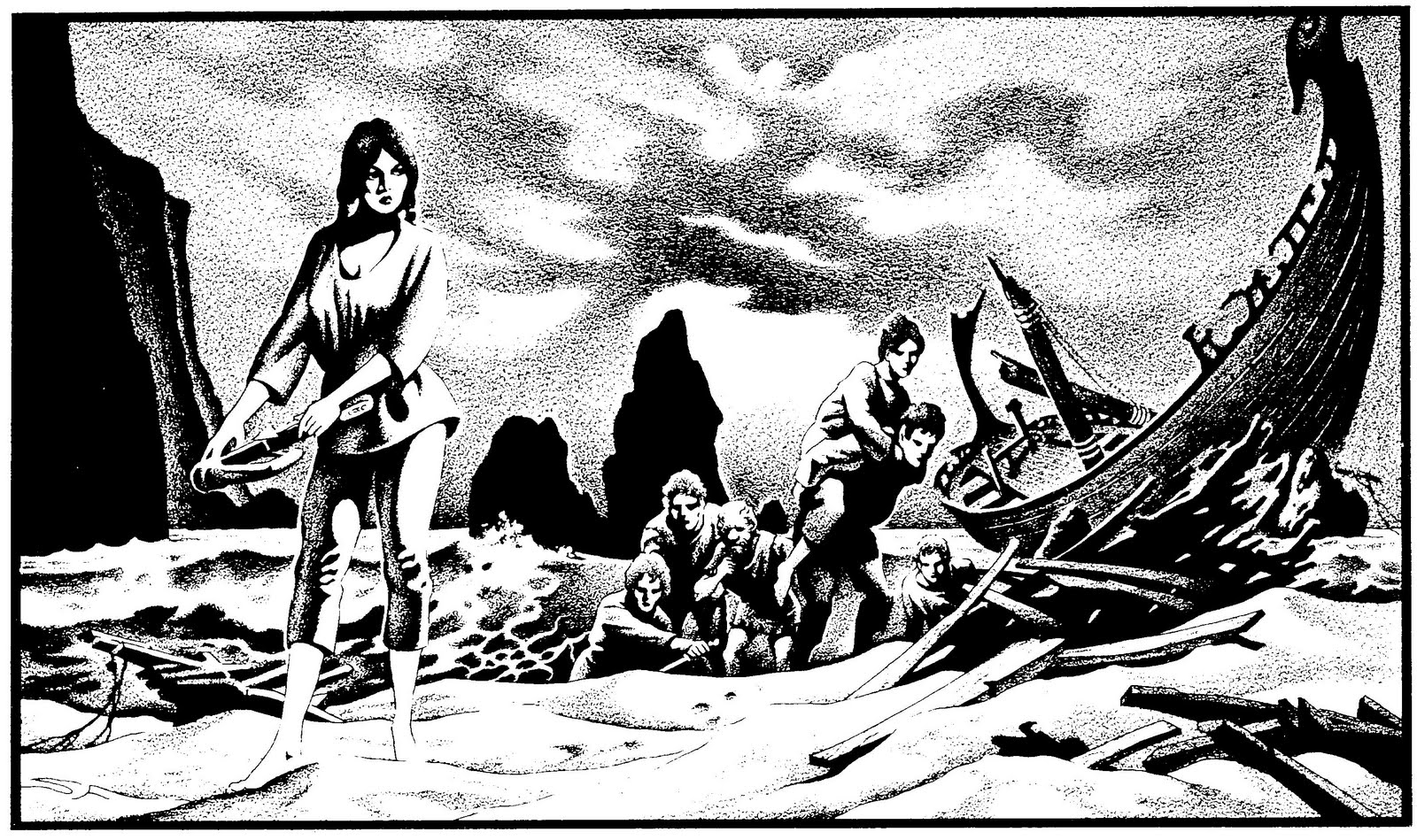
The basic premise is that the characters begin play as typical nobodies – 0 level fighters taken by slavers only to be stranded on a deserted island. Beginning at -500xp, the choices made by the characters during the game help determined what class that character eventually becomes at 1st level. The module includes convincing enough mechanics and encounters to justify development into just about every character class in any Old School setting. There is even a convincing “religious epiphany” moment to justify a character suddenly “finding god” and wishing to become a cleric.

Refreshingly, given that the characters begin with nothing more than the clothes on their back (or, rather, loins. They are slaves remember) the module tends to reward players that either avoid combat altogether or else cunningly take advantage of the environment to even the odds. By the time the characters reach a point in the adventure where they positively have to fight, they should have advanced to first level and scavenged enough weapons and armour to have a reasonable chance of surviving.

Ultimately, of course, the goal is to abandon the island and return to civilisation. The module includes brief notes on an island archipelago (one which contains the N-4 Island) as a setting for further adventures. Successful exploration of the nearby islands is facilitated by the ultimate treasure to found in the module – a boat.

For me, one of the best features of the module is that is allows new players to work out what type of character they would like to play, through play. Thus a character who decides he really would prefer to be a cleric rather than a fighter has a convincing means to change from one to the other mid-scenario without having to roll up a new character. Another plus is the very setting itself. It's an island, you can place it easily in just about any campaign setting. As an introductory, basic level adventure, it also provides a convincing reason for a motley mix of character races and classes to adventure together -they are escaping from a life of slavery together. Such shared experiences might very well create strong bonds within and between a group of people that might otherwise hate and despise one another. After all, it's hard to actively dislike someone who has helped save your life.

Like any commercial product, the module has it's flaws. It can be a rail-road at times, but with new players unused to gaming this can be a useful thing in and of itself. The module focuses on only one way off the island, yet it hints at two others, both of which would be much, much more difficult for the party to survive. Finally, there is a certain encounter in a temple which I have alluded to earlier. Yes it makes sense given the circumstances, but veteran players might role their eyes at the interest of such a being in a low level party. Come to think of it, there are two possible encounters in the temple that might have veteran players roll their eyes. The second because of a potential “Dick-DM/Ass-Hat” TPK kill moment. An encounter where the creature in question is deadly enough, thank you, without playing out the encounter exactly as written, however sensible the tactics used by the foe.

One of the primary areas of concern for me with regard to module selection is the ease with which a module can be converted to Hyboria. Happily, N-4 cn be adapted with a minimum of effort. The island setting makes it especially easy to incorporate into the Barrachan Isles Sandbox. The slavers are a classic Hyborian foe -and can lead on the Slaves Lords series of modules at a later date. Finally, the main antagonists of the module consist of warring bands of orcs and goblins. Obviously, for those who know Hyboria, this isn't exactly an appropriate choice of foe. Easy enough, however to replace the goblins with Picts and swap out the orcs for a band of Pirates. Success. Module adapted in under thirty seconds.

Treasure Hunt is an undiscovered, unforgotten gem of a module lost amid the sheer cornucopia of other, equally good entry level modules produced by TSR. Yet it's unique features should help it stand out from the crowd. This is why I'm especially happy for the opportunity to use it as the opening module of my new Hyborian campaign. A cracking module which, despite it's flaws, I love to run again and again.