Wednesday, 29 June 2011

Linking Keyed Encounters with Wandering Monsters

One of the things I enjoy most about building a sandbox is created  keyed location encounters and wandering monster tables. One of the things that proves how obsessively anal I am as GM is the fact that these are all updated regularly to take into account campaign events, like not encountering a camp of guys from faction A at hex XXYY if the guys from A are all under siege back at hex AABB. The second thing that proves my status (and oddly the most time-consuming) is the fact that every single possible random encounter is also linked in some manner to a keyed location encounter . Those wondering monsters have to live somewhere right?

Lions, wolves, bears, orcs, giant-elephant eating flying lizards, whatever. If it can pose a threat to a PC and appears on my random encounter tables then that very same individual creature also appears in a keyed-location encounter somewhere (and vice versa). So if one or more wandering monsters creatures are killed or wounded in an encounter, I immediately update the keyed encounter to reflect these changes (sometimes mid-session while the PC's are planning their next move, most often right after the session. Likewise, if a monster is killed in its keyed location, then I quickly update the information on the random encounter table as well.

This is every bit as true for my dungeons denizens as it is for wilderness inhabitants.

I often wonder if my players even notice that the more they clear-out an area the less wandering monsters they encounter (because so many of the wandering monster rolls now come up with creatures who have already been killed elsewhere). I've seen the occasional Eureka moment with my players now and then, mind you. Like the time my players cleared out an orc lair and discovered a magical sword looted from a dead PC by those self-same orcs in an earlier encounter thirty miles away. But did my players simply think this was just a cool way to re-introduce an old magical item to the game? Or did they actually realise they only got the sword back because they happened to track down this particular band of orcs?

Does anyone else link their keyed encounters and wandering monsters this way? Or am I simply an obsessive freak? The reason I'm asking is that I'm currently creating hex-linked and random encounters for the Expeditionary Campaigns wilderness map, the Isle of the Earth-Shaker. Much as I'm joining the process, I can't help but think I could get this whole campaign up and running a lot sooner if I wasn't so damnably anal-retentive. Is the extra-effort worth the pay-off if the players don't even notice?

Sunday, 26 June 2011

The Expeditionary Campaign: Player Map

 Spoiler warning for prospective players. You might not want to scroll any further down than this.

Here's the player map (without GM only icons and absent features as basic as sources of fresh drinking water) for the Isle of the Earthshaker. It's a relatively small island (1 hex to 1 mile) but there will be several mega-dungeons, a few smaller dungeons and encounter locations, a ruined city, a temple complex and an inhabited village to explore.

Of course, I don't intend feeding my players all of this information regarding terrain at once. They will have a blank hex map of their own to record this stuff. And there's a very good chance I'll have altered this map considerably before the campaign begins (hint hint). But it serves to illustrated the basic outline and shape of the island.

Made with Hexographer. If any of you have ever been to the Canary Islands or to any volcanic island in the Med, then you'll have a fairly good idea of how the terrain on the map relates to real life. Lots of sharp, rocky badland areas and mountains higher up but with good soil, streams, and plenty of forest at lower elevations, with steep slopes throughout. Can anyone tell me the name of the real island it's based on? I know for a fact some of you can.

Friday, 24 June 2011

The Expeditionary Campaign: 15 Things Players Will Need to Know

Been thinking a lot about the Expeditionary Campaign while at work today. It occurred to me that of the two dozen or so potential recruits I intend to invite (the list keeps growing) only about eight have ever played in Zama before. And  back then they were playing it using 4th ed rules.

So here's a quick run-down of the email I intend to send my potential recruits, complete with 15 things they will need to know to play the game. It'll be a while yet before I send it out, probably a month. The delay will give me time to set things up, tweak the setting back to OSRIC from the present incarnation and draw out the new maps and dungeons.

In the meantime, would anyone care to share their thoughts please? Am I underselling this? And if so, how can I go about improving the sales pitch?

Dear friends


It feels like an age since we last got together to game, mostly because of my crazy schedule. However, thanks to my awesome friends in the blog sphere, we now have a solution: the Expeditionary campaign.


In the ancient old days of the this hobbies' origins, Gary Gygax and the fathers of roleplaying games used to run massive campaigns at their local gaming group. There could be anything up to thirty players in each campaign, all of whom would rotate in and out as their schedules allowed, all playing in the same campaign, in the same party with the same DM. Think of these companies in the same light as a modern football team -not every player gets to kick a ball in every game. Someone has to be left behind to warm the bench. or the stands. But even so, the guys who didn't get to play in that particular game are still on the same team.


Basically, my proposal is to invite all of you to come game with me at my house. In the same campagin. In the same adventuring party. Yup, all XXXX of you.


Now don't laugh. I rather doubt there will ever be more than a dozen of us around the table at once. Because of my schedule, there will be no regular time and date for the sessions when we will play. Hell, I doubt there will even be a regular duration. Instead, at the beginning of each month, I'll email all the interested parties a list of dates and times when I'll be available to run the game. Those players who are able to attend get to play their characters. Those who don't get to leave their characters behind to guard the camp. That's where every session will begin and end: the camp. So threre's no real difficulty in having players who turn up only once every couple of months. Their character doesn't just suddenly appear in the middle of nowhere on their own. They've been guarding the camp all along.


Now for all this to work,  with the very real possibility of having up to a dozen players at some sessions, we need to use a very simple system. I was toying with the idea of red box D&D or one of it's clones, but OSRIC (a much improved version of 1st edition) I've decided to run. No moaning. No arguments. No point trying to change my mind. It's non-negotiable. I've already done a hell of a lot of campaign prep so we can get started quickly and I'm not changing it all now. Not for anyone.


So why OSRIC? Because it's simple, combats are quick and easy to run, I know it like the back of my hand, the rest of you will pick it up easily and ultimately, because you can all download the damn book as a free pdf from the designers web-site. So there's no excuse for anyone not knowing the rules.


As some of you already know, I've been designing and gaming in my home-brew fantasy world of Zama for about twenty years. So we'll be using that world to game in. Like any fantasy world, it has its own little quirks and ideosyncracies. So here are fifteen things you'll need to know about the campaign (not just the campaign world) if you want to play.

  • The world is called Edarnia. Sure, the campain setting itself is called Zama, but that's because the City State of Zama is where it all began. The sandbox, or region, we will playing in includes the City of Zama and its client states. The region is arrayed on the shores of a sheltered sea similar to the Mediterranean. Depending on who you speak to, this sea is know variously as "Our Sea", "The Middle Sea", "The Wide Blue", "The Poison Water", or the "Great Green". It seems like almost every race or human culture has it's own name for it.
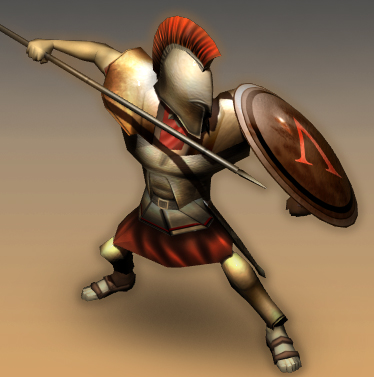
  • It's a "spear-and-sandals setting". Human societies have far more in common with the Greeks, Romans, Carthaginians and Egyptians of earths Classical Period than they do with the knights of the middle ages. Yes, there is a small corner of the world where certain Dark Age tropes exist (such as Vikings and Mongols) but these cultures are geographically very distant from where we will be playing. And remember, in this setting: real men fight with spears. Swords are for wussies and warriors who like having a back-up weapon.
  • Iron is the metal-standard. Or rather, a mixture of Iron and Bronze. Generally speaking, Iron (which can be sharpened without having to recast it) is used for weapons and bronze (which is very hard but can't be sharpened) is used for armour. This setting's version of plate armour isn't Milanese or Gothic plate -it's plain and simple bronze hoplite armour, as seen in films such as Troy, the new Sparacus series, and Clash of the Titans
  • The Gods of Zama take a very real and active interest in the affairs of mortals. They don't interfere directly, but they commonly make personal appearances at major religious ceremonies or observe important battles in person. They can also be cruel and fickle. Many of the settings mightiest heroes are demi-gods themselves. For an idea of how the Gods influence events in this world, think of how they appear in moveis like 300, Jason and the Argonauts and (again) Clash of the Titans.
  • The present generation of Gods are known as the Young Gods. Some Elder Gods and Primordials (the very oldest living gods) still exist, but they are rare and reclusive. The Young and Elder Gods are organised into family groups named Pantheons. Each Pantheon has its own major portfolio - the Pheonixian Gods rule over the sun, stars and the moon for example. The Mycenean Pantheon (which most of your characters will worship))rule over fire, magma, lava, oil and the like. In all the world, there is only every one God of the Sun, Ocean, Fire, Storm etc. But just about every Pantheon has it's own war god, crafts gods, love god etc. Finally, weather patterns are determined by the preferences of the Pantheon worshipped locally. Don't be surprised if you ever look at a map and see  rain forest right next to a desert.
  • Characters begin at first level. Attributes are rolled using the 2D6+6 in order method. Create you character before bringing him or her to the table. There won't be time to create new ones at the beginning of the session. Don't bother buying equipment for your first character You'll read why further down.
  • Zama is a humano-centric setting. Non-human player characters should be fairly uncommon. Elves, Dwarves and the like do exist, but rarely interact with human society. To reflect their dominance and adaptability humans can freely multi-class by combining any two character classes that do not share the same sub-type. A fighter-cleric, is possible, for example. But not a Fighter-Ranger or a MagicUser-Illusionist. Non-humans don't have level limits in Zama, but advance more slowly: it costs them 15% more Xp per level to advance per level.
  • Human characters will be Myceneans from the city state of Mysos. Why? Because the Myceneans are based on ancient Greeks (think Jason and the Argonauts) and are the culture the majority of the players are most likely to be familiar with. Additionally, Mysos is the only Mycenean city-state where women are legally, socially and militarily the equals of men. Outside Mysos and Zama, sexism and strict gender roles are the rule. Be aware of this and prepared to accept it if you wish to play a female character of any race 9not just humans).  In most "civilised" parts of the campaign world, women adventurers are considered repugnant aberrations who set a poor example for local girls.
  • Elves are residents of the Summer-lands (where human souls reside between lives unless they've been bad and where humans go to dream). Those encountered on Edarnia (and all PC elves) are exiles. This effectively means they have been exiled from paradise to spend eternity (elves dont die of old age in this setting) in a shitty mortal world, which explains why Edarnian elves are moody and bitter rather than cheerful and flighty.
  • Dwarves are generally considered mythical by most human cultures. Where they are known to exist, they're viewed (correctly as it happenss) as the "Smiths of the Gods", and have a status similar to that of clergy. This means that dwarfs can expect to be treated in two different ways depending on where they are: as "stunted" or "deformed" humans or as respected priests. Elves and Dwarves are the only races in all the world that know how to forge steel.
  • Gnomes and Halflings are the servants of Elves. PC's are likely to be the descendants of those who followed their elf masters to earth after their exile. Very, very rare and generally mistaken for (and treated) as children.
  • Half-Orcs don't exist. At least, not as an option for player characters. Only a few exist in the whole world and all are exceedingly vile and evil by their very nature.
  • Your first characters begin the game as passengers and crew aboard a Mycenean galley out of Mysos. Or rather, former passengers and crew. Your ship has somehow angered the Earthshaker (perhaps the captain offered vinegar in libation instead of wine), and been wrecked in an unseasonal storm. You wake up amidst the flotsam and jetsam of the wreck, on a sandy beech, with nothing but the clothes on your back and what you can scavenge from the wreckage. Lucky you. The only peice of kit any character automatically finds is his spellbook. Everything else is pre-determined by luck and random rolls. I'll hand out your gear on pre-printed cards at the first session you attend.
  • If you've been horribly evil in life, then you're soul is cursed to wander the Underworld when you die. And by the way, I mean the literal Underworld. Hell in this setting is right beneath your characters feet. When your character travels more than a few hundred yards beneath the earth, your literally travelling into Hell. Yes. That means most Dungeons in this setting are entrances to Hell. Lucky you.
  • Finally, and most importantly, this will be an "Old School" game. Characters will die and they will die often. Characters will die for doing dumb things, for doing heroic things and just as often (perhaps even more often) through plain bad luck. In this type of game, player skill counts for more than character skill. I don't care if you're not a thief. If you say you're looking for a trip wire or tapping the floor with a pole-arm to check for pit traps, you WILL find it if there happens to be one there. You can all sneak about and climb things. Thieves just do it better and call fall back on their percentile skill roll if things start going wrong or if the players imagination starts to fail them. If you're not sure how to play in this type of game then click on the link below to vist my blog. You'll see the survival guides tab at the top of the first page. Click on this to receive the benefit of my wisdom. Grasshopper.
If you are one of the lucky recipients of this email who has been offered this fantastic opportunity to partake of this old school, juicy goodness, please RSVP your acceptance as soon as possible. Details of the first, opening session will follow shortly after you get back to me. Don't worry if you miss the first session. I'll keep everyone who misses out on sessions fully informed of events with a campaign journal, which you'll be able to access readily from my blog.

Thursday, 23 June 2011

The Expeditionary Campaign Model (Or how to get all twenty or so my my gaming buddies playing the same campaign)

In this post [link] Risus Monkey makes an excellent point about Old School campaigning. Essentially, most of the original old school campaigns, (Blackmoor, Greyhawk, Ryth) had a floating pool of several dozen players, who would enter and leave the campaign on a regular basis as their schedules permit. In other words, the exact party composition was different almost every time, both in terms of the characters present as well as the players.

Now who do we know who has a shed-load (well, a double-decker bus load) of gaming buddies he'd love to game with but can't because of his crappy work schedule?

Me. The same guy whose last campaign probably suffered quite a bit from the general inexperience of the players when faced with an unfamiliar concept (the notion of Old School Gaming).

Which led me to do some thinking. I have about two dozen friends who, since I moved back to Glasgow, I'm gamed with at some point or another but whom I now rarely see. I'm also about to start a new OSRIC campaign, once I've finished with the one-off zombie game at least. However, many of the gamers in question are followers of the plot-based rather than sandbox-based gaming philosophy. This would have posed a problem to my nascent master plan if not for one simple little helpful fact.

Risus addresses the same problem in that very article. Or rather, he refers us to another blog article on Ars Ludi [link] wherein the author explains how he managed to juggle a pool of 9 to 14 different players in a plot-based rotating party super-hero' game. Eureka!

Problem solved. I already prefer running a strange bastard mixture of sand-box and plot driven games, where there are anything up to a dozen plot-lines on the go at once for the characters to pursue or abandon at their leisure (and which still progress even when the party isn't following up on them). So why not throw in one of those plot-matrix tables the author of Ars Ludi mentions and give it a go. That should keep players on both sides of the sandbox/plot divide happy and give me a damn good excuse to keep in touch with folk I'd only normally see otherwise at weddings and birthdays.

Cool post Risus. Thank you, Chronicles or Ryth and Ars Ludi for the inspiration.

Now I just have to run it past my dearly beloved. But don't worry. I'm sure she'll love it.

Wednesday, 22 June 2011

Terminus Omega

Wherein I indulge my passions for wargaming, roleplaying and all things Mass Effect. All at the same time.

Terminus Omega: Wargaming and Roleplay in the Mass Effect Universe.

It's not much to look at now. The site's only just gone up. But watch this space.

Random Inn Generator from Inkwell Ideas.

Inkwell Idea's have updated their Random Inn, Staff and Patrons generator with character portraits, among other things.

You can find this really handy generator [here].

There are also options for randomly determining the [floorplan], [rumours] and even the [menu].

Saturday, 18 June 2011

Daily/Weekly Events Table: Rural

A slightly different format (more user friendly) for the table this time. Roll on this table D6+1 times per week when in a rural area. Farms, small villages, the odd small town, homesteads and the like.


D%

01-04 Animals Throws a Shoe:
One of the party's pack or riding animals such as a horse, elephant or camel, throws a shoe or otherwise goes lame. The animals will move at half normal rate for the next d4+1 days (if lamed) or until re-shod (if normally shod).

05-08 Angry Innkeeper:
A member of the party does something stupid that leaves an innkeeper irate, tossing the entire party out onto the street (or trying too at least). If the PCs cause trouble, expect a mob to form as per the result for Burn the Witch, listed above.

09-12 Bad Food:
After stopping off at an inn or the home of a local farmer, one random party member of hireling falls ill for D6+1 days.

13-16 Burn the Witch:
Strange events have occurred in the area over the last few days: milk turning sour, a goat kid with three heads birthed by a cow, people falling ill or becoming uglier by the day and so on. Any unfamiliar spellcaster (such as a PC or NPC party member) spotted casting spells is likely to be blamed. The unfortunate spellcaster will be swarmed by a mob of 2d10+20 angry 0 level human farmers, D4 hit points each, armed with farm implements (D4 damage per hit).

17-20 Burned Settlement:
As day dawns the PCs see smoke rising in the distance. If they investigate or if the smoke lies in their direction of travel, they will come across a burned settlement with the ruins still smouldering. 10% chance of a survivor who can explain what happened. The tracks of those responsible are clearly visible, leading off into the distance....

21-24 Crops/Livestock Damaged:
The PCs pass a field in which crops have been trampled by either the passage of a large body of men
 or a large monster. There is a 15% chance that the farmer who owns the field will blame the PCs and enlist a mob of angry farmers or the local authorities in an attempt to obtain compensation. Alternatively, if the growing season has passed, the farmer is missing one or more of his livestock.


25-28 Dead Traveller:
The PCs come across the body of a dead traveller on the road. Roll D4 for cause of death. 1= accident, 2=disease, 3= violence, 4= unknown. The body has already been stripped of valuables and is D3 days old.

29-32 Entreaty:
While passing through a settlement the party is approached by a local leader who needs their help with a problem. Insert adventure hook of choice here.

33-36 Festival:
A local religious festival is in progress. It will be next to impossible to obtain any service or make any purchases save those related to alcohol and celebration for the next D4 days until the party peeters out and sore heads recover.

37-40 Hay Fever:
One of more randomly determined party members from an urban background is struck by a particularly bad case of hey fever and is at -1 to all dice rolls due to sneezing until such time as her succeeds on a saving throw versus poison (taken once per following day) or returns to an urban environment for at least a week.

41-44 Horse Thief:
If camped then a thief of level D4 will attempt to sneak past any guards and steal a horse. If sleeping at an inn then unless the PCs have left a guard on their horses this theft is automatic. The party loses 1d4 horses, starting with the most expensive. Note that the thief will not attempt to steal any warhorses, only riding and pack horses, mules, donkeys and pony's. They may a thief, but they're not THAT stupid.

44-48 Hireling Trouble:
One of the party's hirelings (randomly determine which) has fallen in love with a local lad or lass and wishes to be released from service. If the answer is yes he is thrilled, sells his war gear and retires. If refused lower his or her morale permanently by 30% and make a loyalty test for the hireling each day. If he ever fails either test (morale or loyalty) he runs away taking with him all his gear and one randomly determined magical item belonging to his master (where possible) back to his lady (or laddy) love.

49-52 Hunting Animal:
During the course of the day, the party encounters a number of wild food animals such as a deer, hare or rabbits. Any characters with ranged weapons can make one ranged attack each against the AC of the creature type discovered. Add one days worth of fresh meat for D4 people to the party's supplies for every successful attack roll.

53-56 Injured Traveller:
The party encounters an injured man on the road. 50% that 1d4 travelling companions are present. If the yearly event for this year included an act that would cause unrest or violence, or if any bandit or incursion results have been rolled on the monthly events table this year, then there is an 80% chance that this is an ambush.

57-60 Man-Eater: As per the Urban Daily Event.

61-64 Market Day:
The PCs pass through a village on market day. Treat the availability of goods as though the party were visiting a small town. However, prices remain those of a small village. 10% chance that one of the PCs will have an encounter with a pickpocket (human thief of D4 levels). The roads and paths are so busy that wilderness travel this day is reduced by a full 50%.

65-68 Patrol:
The PCs hear from a local that a party of warriors past through town D4 days before, seeking news of a group matching the characters description. They could be mercenaries hired by an enemy to hunt the party down and kill them, mercenaries looking for employment or a group sent by a former or future patron who needs their services.

68-72 Runaways:
D4 young villagers run away from home and follow the PCs, wishing to be employed as squires (though they'll settle for employment as porters and torch-bearers if it comes to it). There is a 50% chance that one or more parents (perhaps accompanied by the rest of the family) turns up looking for them. Let's hope there are no misunderstandings regarding "kidnapping."

72-76 Supplies Ruined:
D10% of the party's supplies are stolen or spoiled, either by mould, locusts or an infestation of other vermin such as rats of weevils. Anyone foolish enough to attempt to eat these spoiled supplies must save vs poison or be ill for D6+1 days.

77-80 Temptation:
One of the male PCs catches the interest of a pretty young farmers daughter. If seduced there is a 30% chance of being discovered by the irate father. If the father does not turn up there is a 15% chance that the girl will fall in love with her paramour and run off after him. If this happens the father is likely to pursue to recover his "kidnapped" daughter -and may bring friends. Finally, if the girl is seduced and does not go running off after her lover, there is a good 10% chance that she falls pregnant (very fertile these nature-goddess worshipping farmers daughters, so they are). Depending on when the party next pass through, the lass might present the PC with a child, or, if she is aware that she has become pregnant, ask the PC to take her away. If this happens and the father has learned who is responsible, he is almost certain to demand that the PC in question marry his daughter.

If the PC refuses to accept his responsibilities then the next time he passes through the village, the girl and any child will likely be absent. Either sold into slavery by the father or else run off to the nearest city to become a prostitute (where the PC may very well encounter her once again, this time while undertaking her new profession in their favorite tavern or drinking spot). She is unlikely to be thrilled to see him.

81-84 Thief:
During the night, a D4 level thief attempts to steal into a random party members tent or inn room and steal his possessions.

85-88 Toughs:
A group of local toughs, (0 level fighters, 1 per PC) takes exception to the "fancy adventurers" throwing all their gold around, prancing about in their nice clothes and catching the eye of all the wummin' folk. They decide to do something about it by picking a fight, either in the local watering hall or village common or by attacking late at night. They will try to target lone party members first, and will pay particular attention to the PC (male or female) with the highest charisma or comeliness score.

89-92 Weather Woes:
Inclement weather makes travelling incredibly difficult for the next D6+1 days (but continue to roll daily events as usual). In spring and autumn this is due to heavy rains, a heat-wave in summer or a blizzard in winter. In rains or blizzards reduce visibility and movement by 50% and subtract 4 from all ranged weapon attack rolls. Additionally, each PC who travels during this time must save vs disease or risk catching hypothermia. Those who catch hypothermia and recover must make another save vs disease or risk pneumonia. In summer, a save vs disease must be made to avoid heat-stroke, with a +4 saving throw bonus is the party does not travel. Character wearing metal armour during the heat-wave make the save with a negative saving throw modifier of -4.

93-96 Wheel Thrown:
If the PCs own a cart, wagon or chariot then it has thrown or shattered a wheel on these poor, dusty roads. Reduce the carts speed to 75% until it can be repaired or replaced. 10% that one or more draft animals pulling the wagon are lamed for 1d4 days .

97-00 Love Interest:
As per the Maiden result on the Urban Events table. Unlike with the Temptation result above the willing partner is completly unattacthed and without interfering parents. Perhaps a widow(er), tavern wench or lonely "witch" or lone demi-human living in the village outskirts. She may even be a farmers daughter with a living father (as with the Tempation result), but one too drunk or ill to care. The only complication likely to arise from this encounter is the prospect of pregnancy should the encounter involve heterosexual characters. Consult the Unlawful Guide to Carnal Knowledge or impose a flat 10% chance (steep, but as with the farmers daughter above, these rural types are very in with Fertility deities).

My personal favorite from this table is the temptation result. Oh the fun to be had. Imagine gentle reader, if you will, a character escorting a caravan from Zama to the Arcane Imperium having the misfortune of being approached by comely farmers daughters  three times on the one journey. Being a lawful type, by the time he arrived at Zama on the return journey he'd ended up with 3 wives, a son and two more babies on the way. But don't worry, the odds of this sort of thing happening to one of your characters are astronomical. Really.