Sunday, 3 July 2011

Zama: Mycenean Gods

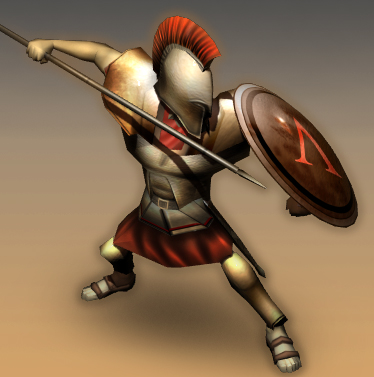
The Mycenean Pantheon is just one of many divine families that rule over the mortals of Edarnia. The majority of clerics and paladins in the new Expeditionary Campaign will be worshippers of this Pantheon, hence I've posted it here for potential players to take a look at. The name and most common title/honorific are given in bold type. Lesser titles are those listed in normal type. It is considered vulgar for a Mycenean to name a god without also using at least the greater title as well, to distinguish the fact the speaker is referring to a Deity rather than any mere mortal with the same name.

Major Gods:

Pysos: The Earthshaker, The Lord of the Flows, The Beast of Darkness. Emperor of Flame. Lord of the Underworld.
Chaotic Neutral
The Earthshaker is the terrifying, brutal head of the Mycenean Pantheon. An Elder God of mercurial temper and violent rages, many believe it is only a matter of time before this rampaging Deity is deposed by one of the Young Gods of his Pantheon. Pysos is the God of Fire, Earthquakes, Smelting, Miners and Volcanic Eruptions. He appears as a tall, wild-eyed man hurling fireballs, his beard wreathed in flame.
Clerical Weapons: Staff, Javelin, Dart, Spear, Shortsword, Flaming Oil. All Clerics of Pysos MUST choose flaming oil as one of their starting weapon proficiencies.


Haestia: Mother of Women. Wife of Pysos, Mother of the Gods, Persecutor of Adulterous Men.
Lawful Neutral
Haestia, wife of Pysos, is believed to be the true power (and stabilising influence) among the Gods of the Mycenean Pantheon, prone to deflecting her husbands rages elsewhere upon those whom she herself feels have wronged her. Though she has been betrayed by her husband many times, ever the faithful wife, she has taken no lovers of her own. Instead seeking to take revenge in subtler ways. Some whisper that is it Haestia herself who is the cause of her husbands madness. Many of her clerics multi-class as Assassins or Magic-Users.
She is the Mycenean Goddess of wives, marriage, morals, hearth-fires and revenge.
Clerical Weapons: Sling, Staff, Dagger, Poison, Blow Gun, Dart.

  
Dion: The Virgin Huntress. Lady of the Woods. Guardian of Virtue. Queen of the Amazons. Protectress of Mysos.
Chaotic Good
Dion is the virginal daughter of Haestia and Pysos, who bears her father an eternal hatred following his failed attempt at rape in a drunken rage. She dwells apart from the other Gods and supports the rights of women in Mycenean society. She is the protector and patron of the city state of Mysos -the only Mycenean city-state where women are the equal of men in all things- and of the Amazons. She remains a friend of her sister, Merax but hates her mother, Haestia, for continuing to support her hated father. She is the goddess of the Hunt, Wild Places, Virginity, Wild-Fires and Freedom.
Clerics of Dion may be male or female, but must remain chaste and celibate. If they break this stringent rule, even involuntarily, they loose all clerical powers unless and until the offending sexual partner dies at the clerics own hand. Many multi-class as fighters or rangers.

Clerical Weapons: Bow, Sling, Spear, Javelin, Dart.

Merax: The Obedient Daughter, the Lady of Law, the Shield of Mycene, Founder of Cities
Lawful Good
Merax is the obedient daughter of Pysos, twin-sister to Dion and the patron of law, order and cities. When Pysos, in a black-rage, attempted to rape Dion in a drunken stupor, it was Merax who fought him off, earning her recognition amoung mortals as the protector of law and decency. It is said that while Dion taught the Myceneans how to live and farm in the wilderness, it was Merax that taught them to build and flourish in the cities.
Merax is the Myceanean Goddess of Crafts, Building, Law, Order, Justice and all those who work to further the cause of Mycenean civilisation as it is now, not as it should be (that is Dion's purview). Thus she is popular among city-dwellers of all stripes, but particularly clerks, lawyers, politicians and generals. She is the Goddess of the Forge and a skilled armourer/weaponsmith.

Clerical Weapons: Spear, Shortsword, Javelin, Dart, Sling.


Helkeon: The Bloody-Handed, God of War, Savagery and Conquest.
Chaotic Evil
If Meera and Dion represent the best parts of their mother, then Helkeon is all that is worst in his father. A brutal, terrifying God of savagery and warfare, Helkeon is a bloodthirsty maniac, never satisfied or content unless he (or one of his servants) is sticking his spear into an enemy or something else into an enemy's wife. Eternally at odds with his siblings, he fears Merax (for her disciplined fighting style easily overcomes his own berserk indiscipline) and despises Dion, whom he seeks to murder, dismember and display for the delight of his beloved father.

He is the God of Blood-shed, murder, war, arson, rape and pillage. The favoured God of bandits, brigands, pirates, mercenaries and the less-savoury sort of soldier. Needless to say, he is also a very popular God among the Balaerians.

Clerical Weapons: Short Sword, Spear, Javelin, Dart, Morning Star.

Minor Gods: 

Few minor members of the Pantheon have a direct blood relationship to Pysos. In fact, most are mortal woman he has bedded, raised to immortality lest they die before he tire of them. Haestia is the avowed enemy of most of these. The other "demi-gods" are most often the children of trysts and the occasional (brief) marriage between Merax and a mortal Mycenean. Her father will not allow her to grant immortality to these lovers however, and so they have been few and far between. The minor gods listed here represent only a partial list. There are many more.

Athlos: Swift-Running Athlos
Neutral Good
Patron God of Athletics, Sports and Gymnasia
Son of Merax and a human athlete named Mesos. Clerical Weapons include: throwing hammer, javelin, dart, spear, short-sword.

Miranda: Far-Seeing Miranda. Lady of Oracles, The Blind Trollop (to followers of Haestia only).
Neutral
Worshipped by Mycenean magic-users and illusionists. She is hated by Haestia even more so that the rest of Pysos' cast-offs since her husband made of gift of Heastia's command of magic to this "blind trollop." Many Mycenean spell-casters continue to follow Haestia rather than Miranda.
Clerical Weapons: Staff, Dagger, Dart,

Fortuna: Fickle Friend or Foe, Lady of Luck
Neutral
Minor Goddess of Luck and Gaming. Worshipped by thieves, gamblers and tricksters of all sorts.
Clerical Weapons: Short Sword, Dagger, Sling.

Infamia: Gossip of the Gods
Chaotic Neutral
Minor Goddess of spies, whispering, gossip and intrigues.
Clerical Weapons: Short Sword, Dagger, Dart.

Tryastia: Maid of Victory:
Lawful Neutral
Minor Goddess of successful endeavours and battlefield victory.

Tarnax: Spawn of Helkeon
Neutral Evil
God of Unwanted or Murdered Children and Orphans.
Son of Helkeaon by an unwilling (mortal) woman. Murdered at birth by his mother. Clerical Weapons: Dagger, Poison, Scythe, Sickle.


Note: Yes, there is an intended dichotomy here in the nature of the Gods and Mycenean society: Mycenean society is dominated by men, but underpinned and stabilised by the efforts of female Gods. This is, if you like, one of the main themes around which Mycenean's in Zama were built. In other words, behind every great man there's a good woman. Let the controversy begin.

Wednesday, 29 June 2011

Linking Keyed Encounters with Wandering Monsters

One of the things I enjoy most about building a sandbox is created  keyed location encounters and wandering monster tables. One of the things that proves how obsessively anal I am as GM is the fact that these are all updated regularly to take into account campaign events, like not encountering a camp of guys from faction A at hex XXYY if the guys from A are all under siege back at hex AABB. The second thing that proves my status (and oddly the most time-consuming) is the fact that every single possible random encounter is also linked in some manner to a keyed location encounter . Those wondering monsters have to live somewhere right?

Lions, wolves, bears, orcs, giant-elephant eating flying lizards, whatever. If it can pose a threat to a PC and appears on my random encounter tables then that very same individual creature also appears in a keyed-location encounter somewhere (and vice versa). So if one or more wandering monsters creatures are killed or wounded in an encounter, I immediately update the keyed encounter to reflect these changes (sometimes mid-session while the PC's are planning their next move, most often right after the session. Likewise, if a monster is killed in its keyed location, then I quickly update the information on the random encounter table as well.

This is every bit as true for my dungeons denizens as it is for wilderness inhabitants.

I often wonder if my players even notice that the more they clear-out an area the less wandering monsters they encounter (because so many of the wandering monster rolls now come up with creatures who have already been killed elsewhere). I've seen the occasional Eureka moment with my players now and then, mind you. Like the time my players cleared out an orc lair and discovered a magical sword looted from a dead PC by those self-same orcs in an earlier encounter thirty miles away. But did my players simply think this was just a cool way to re-introduce an old magical item to the game? Or did they actually realise they only got the sword back because they happened to track down this particular band of orcs?

Does anyone else link their keyed encounters and wandering monsters this way? Or am I simply an obsessive freak? The reason I'm asking is that I'm currently creating hex-linked and random encounters for the Expeditionary Campaigns wilderness map, the Isle of the Earth-Shaker. Much as I'm joining the process, I can't help but think I could get this whole campaign up and running a lot sooner if I wasn't so damnably anal-retentive. Is the extra-effort worth the pay-off if the players don't even notice?

Sunday, 26 June 2011

The Expeditionary Campaign: Player Map

 Spoiler warning for prospective players. You might not want to scroll any further down than this.

Here's the player map (without GM only icons and absent features as basic as sources of fresh drinking water) for the Isle of the Earthshaker. It's a relatively small island (1 hex to 1 mile) but there will be several mega-dungeons, a few smaller dungeons and encounter locations, a ruined city, a temple complex and an inhabited village to explore.

Of course, I don't intend feeding my players all of this information regarding terrain at once. They will have a blank hex map of their own to record this stuff. And there's a very good chance I'll have altered this map considerably before the campaign begins (hint hint). But it serves to illustrated the basic outline and shape of the island.

Made with Hexographer. If any of you have ever been to the Canary Islands or to any volcanic island in the Med, then you'll have a fairly good idea of how the terrain on the map relates to real life. Lots of sharp, rocky badland areas and mountains higher up but with good soil, streams, and plenty of forest at lower elevations, with steep slopes throughout. Can anyone tell me the name of the real island it's based on? I know for a fact some of you can.

Friday, 24 June 2011

The Expeditionary Campaign: 15 Things Players Will Need to Know

Been thinking a lot about the Expeditionary Campaign while at work today. It occurred to me that of the two dozen or so potential recruits I intend to invite (the list keeps growing) only about eight have ever played in Zama before. And  back then they were playing it using 4th ed rules.

So here's a quick run-down of the email I intend to send my potential recruits, complete with 15 things they will need to know to play the game. It'll be a while yet before I send it out, probably a month. The delay will give me time to set things up, tweak the setting back to OSRIC from the present incarnation and draw out the new maps and dungeons.

In the meantime, would anyone care to share their thoughts please? Am I underselling this? And if so, how can I go about improving the sales pitch?

Dear friends


It feels like an age since we last got together to game, mostly because of my crazy schedule. However, thanks to my awesome friends in the blog sphere, we now have a solution: the Expeditionary campaign.


In the ancient old days of the this hobbies' origins, Gary Gygax and the fathers of roleplaying games used to run massive campaigns at their local gaming group. There could be anything up to thirty players in each campaign, all of whom would rotate in and out as their schedules allowed, all playing in the same campaign, in the same party with the same DM. Think of these companies in the same light as a modern football team -not every player gets to kick a ball in every game. Someone has to be left behind to warm the bench. or the stands. But even so, the guys who didn't get to play in that particular game are still on the same team.


Basically, my proposal is to invite all of you to come game with me at my house. In the same campagin. In the same adventuring party. Yup, all XXXX of you.


Now don't laugh. I rather doubt there will ever be more than a dozen of us around the table at once. Because of my schedule, there will be no regular time and date for the sessions when we will play. Hell, I doubt there will even be a regular duration. Instead, at the beginning of each month, I'll email all the interested parties a list of dates and times when I'll be available to run the game. Those players who are able to attend get to play their characters. Those who don't get to leave their characters behind to guard the camp. That's where every session will begin and end: the camp. So threre's no real difficulty in having players who turn up only once every couple of months. Their character doesn't just suddenly appear in the middle of nowhere on their own. They've been guarding the camp all along.


Now for all this to work,  with the very real possibility of having up to a dozen players at some sessions, we need to use a very simple system. I was toying with the idea of red box D&D or one of it's clones, but OSRIC (a much improved version of 1st edition) I've decided to run. No moaning. No arguments. No point trying to change my mind. It's non-negotiable. I've already done a hell of a lot of campaign prep so we can get started quickly and I'm not changing it all now. Not for anyone.


So why OSRIC? Because it's simple, combats are quick and easy to run, I know it like the back of my hand, the rest of you will pick it up easily and ultimately, because you can all download the damn book as a free pdf from the designers web-site. So there's no excuse for anyone not knowing the rules.


As some of you already know, I've been designing and gaming in my home-brew fantasy world of Zama for about twenty years. So we'll be using that world to game in. Like any fantasy world, it has its own little quirks and ideosyncracies. So here are fifteen things you'll need to know about the campaign (not just the campaign world) if you want to play.

  • The world is called Edarnia. Sure, the campain setting itself is called Zama, but that's because the City State of Zama is where it all began. The sandbox, or region, we will playing in includes the City of Zama and its client states. The region is arrayed on the shores of a sheltered sea similar to the Mediterranean. Depending on who you speak to, this sea is know variously as "Our Sea", "The Middle Sea", "The Wide Blue", "The Poison Water", or the "Great Green". It seems like almost every race or human culture has it's own name for it.
  • It's a "spear-and-sandals setting". Human societies have far more in common with the Greeks, Romans, Carthaginians and Egyptians of earths Classical Period than they do with the knights of the middle ages. Yes, there is a small corner of the world where certain Dark Age tropes exist (such as Vikings and Mongols) but these cultures are geographically very distant from where we will be playing. And remember, in this setting: real men fight with spears. Swords are for wussies and warriors who like having a back-up weapon.
  • Iron is the metal-standard. Or rather, a mixture of Iron and Bronze. Generally speaking, Iron (which can be sharpened without having to recast it) is used for weapons and bronze (which is very hard but can't be sharpened) is used for armour. This setting's version of plate armour isn't Milanese or Gothic plate -it's plain and simple bronze hoplite armour, as seen in films such as Troy, the new Sparacus series, and Clash of the Titans
  • The Gods of Zama take a very real and active interest in the affairs of mortals. They don't interfere directly, but they commonly make personal appearances at major religious ceremonies or observe important battles in person. They can also be cruel and fickle. Many of the settings mightiest heroes are demi-gods themselves. For an idea of how the Gods influence events in this world, think of how they appear in moveis like 300, Jason and the Argonauts and (again) Clash of the Titans.
  • The present generation of Gods are known as the Young Gods. Some Elder Gods and Primordials (the very oldest living gods) still exist, but they are rare and reclusive. The Young and Elder Gods are organised into family groups named Pantheons. Each Pantheon has its own major portfolio - the Pheonixian Gods rule over the sun, stars and the moon for example. The Mycenean Pantheon (which most of your characters will worship))rule over fire, magma, lava, oil and the like. In all the world, there is only every one God of the Sun, Ocean, Fire, Storm etc. But just about every Pantheon has it's own war god, crafts gods, love god etc. Finally, weather patterns are determined by the preferences of the Pantheon worshipped locally. Don't be surprised if you ever look at a map and see  rain forest right next to a desert.
  • Characters begin at first level. Attributes are rolled using the 2D6+6 in order method. Create you character before bringing him or her to the table. There won't be time to create new ones at the beginning of the session. Don't bother buying equipment for your first character You'll read why further down.
  • Zama is a humano-centric setting. Non-human player characters should be fairly uncommon. Elves, Dwarves and the like do exist, but rarely interact with human society. To reflect their dominance and adaptability humans can freely multi-class by combining any two character classes that do not share the same sub-type. A fighter-cleric, is possible, for example. But not a Fighter-Ranger or a MagicUser-Illusionist. Non-humans don't have level limits in Zama, but advance more slowly: it costs them 15% more Xp per level to advance per level.
  • Human characters will be Myceneans from the city state of Mysos. Why? Because the Myceneans are based on ancient Greeks (think Jason and the Argonauts) and are the culture the majority of the players are most likely to be familiar with. Additionally, Mysos is the only Mycenean city-state where women are legally, socially and militarily the equals of men. Outside Mysos and Zama, sexism and strict gender roles are the rule. Be aware of this and prepared to accept it if you wish to play a female character of any race 9not just humans).  In most "civilised" parts of the campaign world, women adventurers are considered repugnant aberrations who set a poor example for local girls.
  • Elves are residents of the Summer-lands (where human souls reside between lives unless they've been bad and where humans go to dream). Those encountered on Edarnia (and all PC elves) are exiles. This effectively means they have been exiled from paradise to spend eternity (elves dont die of old age in this setting) in a shitty mortal world, which explains why Edarnian elves are moody and bitter rather than cheerful and flighty.
  • Dwarves are generally considered mythical by most human cultures. Where they are known to exist, they're viewed (correctly as it happenss) as the "Smiths of the Gods", and have a status similar to that of clergy. This means that dwarfs can expect to be treated in two different ways depending on where they are: as "stunted" or "deformed" humans or as respected priests. Elves and Dwarves are the only races in all the world that know how to forge steel.
  • Gnomes and Halflings are the servants of Elves. PC's are likely to be the descendants of those who followed their elf masters to earth after their exile. Very, very rare and generally mistaken for (and treated) as children.
  • Half-Orcs don't exist. At least, not as an option for player characters. Only a few exist in the whole world and all are exceedingly vile and evil by their very nature.
  • Your first characters begin the game as passengers and crew aboard a Mycenean galley out of Mysos. Or rather, former passengers and crew. Your ship has somehow angered the Earthshaker (perhaps the captain offered vinegar in libation instead of wine), and been wrecked in an unseasonal storm. You wake up amidst the flotsam and jetsam of the wreck, on a sandy beech, with nothing but the clothes on your back and what you can scavenge from the wreckage. Lucky you. The only peice of kit any character automatically finds is his spellbook. Everything else is pre-determined by luck and random rolls. I'll hand out your gear on pre-printed cards at the first session you attend.
  • If you've been horribly evil in life, then you're soul is cursed to wander the Underworld when you die. And by the way, I mean the literal Underworld. Hell in this setting is right beneath your characters feet. When your character travels more than a few hundred yards beneath the earth, your literally travelling into Hell. Yes. That means most Dungeons in this setting are entrances to Hell. Lucky you.
  • Finally, and most importantly, this will be an "Old School" game. Characters will die and they will die often. Characters will die for doing dumb things, for doing heroic things and just as often (perhaps even more often) through plain bad luck. In this type of game, player skill counts for more than character skill. I don't care if you're not a thief. If you say you're looking for a trip wire or tapping the floor with a pole-arm to check for pit traps, you WILL find it if there happens to be one there. You can all sneak about and climb things. Thieves just do it better and call fall back on their percentile skill roll if things start going wrong or if the players imagination starts to fail them. If you're not sure how to play in this type of game then click on the link below to vist my blog. You'll see the survival guides tab at the top of the first page. Click on this to receive the benefit of my wisdom. Grasshopper.
If you are one of the lucky recipients of this email who has been offered this fantastic opportunity to partake of this old school, juicy goodness, please RSVP your acceptance as soon as possible. Details of the first, opening session will follow shortly after you get back to me. Don't worry if you miss the first session. I'll keep everyone who misses out on sessions fully informed of events with a campaign journal, which you'll be able to access readily from my blog.

Thursday, 23 June 2011

The Expeditionary Campaign Model (Or how to get all twenty or so my my gaming buddies playing the same campaign)

In this post [link] Risus Monkey makes an excellent point about Old School campaigning. Essentially, most of the original old school campaigns, (Blackmoor, Greyhawk, Ryth) had a floating pool of several dozen players, who would enter and leave the campaign on a regular basis as their schedules permit. In other words, the exact party composition was different almost every time, both in terms of the characters present as well as the players.

Now who do we know who has a shed-load (well, a double-decker bus load) of gaming buddies he'd love to game with but can't because of his crappy work schedule?

Me. The same guy whose last campaign probably suffered quite a bit from the general inexperience of the players when faced with an unfamiliar concept (the notion of Old School Gaming).

Which led me to do some thinking. I have about two dozen friends who, since I moved back to Glasgow, I'm gamed with at some point or another but whom I now rarely see. I'm also about to start a new OSRIC campaign, once I've finished with the one-off zombie game at least. However, many of the gamers in question are followers of the plot-based rather than sandbox-based gaming philosophy. This would have posed a problem to my nascent master plan if not for one simple little helpful fact.

Risus addresses the same problem in that very article. Or rather, he refers us to another blog article on Ars Ludi [link] wherein the author explains how he managed to juggle a pool of 9 to 14 different players in a plot-based rotating party super-hero' game. Eureka!

Problem solved. I already prefer running a strange bastard mixture of sand-box and plot driven games, where there are anything up to a dozen plot-lines on the go at once for the characters to pursue or abandon at their leisure (and which still progress even when the party isn't following up on them). So why not throw in one of those plot-matrix tables the author of Ars Ludi mentions and give it a go. That should keep players on both sides of the sandbox/plot divide happy and give me a damn good excuse to keep in touch with folk I'd only normally see otherwise at weddings and birthdays.

Cool post Risus. Thank you, Chronicles or Ryth and Ars Ludi for the inspiration.

Now I just have to run it past my dearly beloved. But don't worry. I'm sure she'll love it.

Wednesday, 22 June 2011

Terminus Omega

Wherein I indulge my passions for wargaming, roleplaying and all things Mass Effect. All at the same time.

Terminus Omega: Wargaming and Roleplay in the Mass Effect Universe.

It's not much to look at now. The site's only just gone up. But watch this space.

Random Inn Generator from Inkwell Ideas.

Inkwell Idea's have updated their Random Inn, Staff and Patrons generator with character portraits, among other things.

You can find this really handy generator [here].

There are also options for randomly determining the [floorplan], [rumours] and even the [menu].