Tuesday, 26 April 2011

Cascade Failure Sandbox: The Auqlan A System

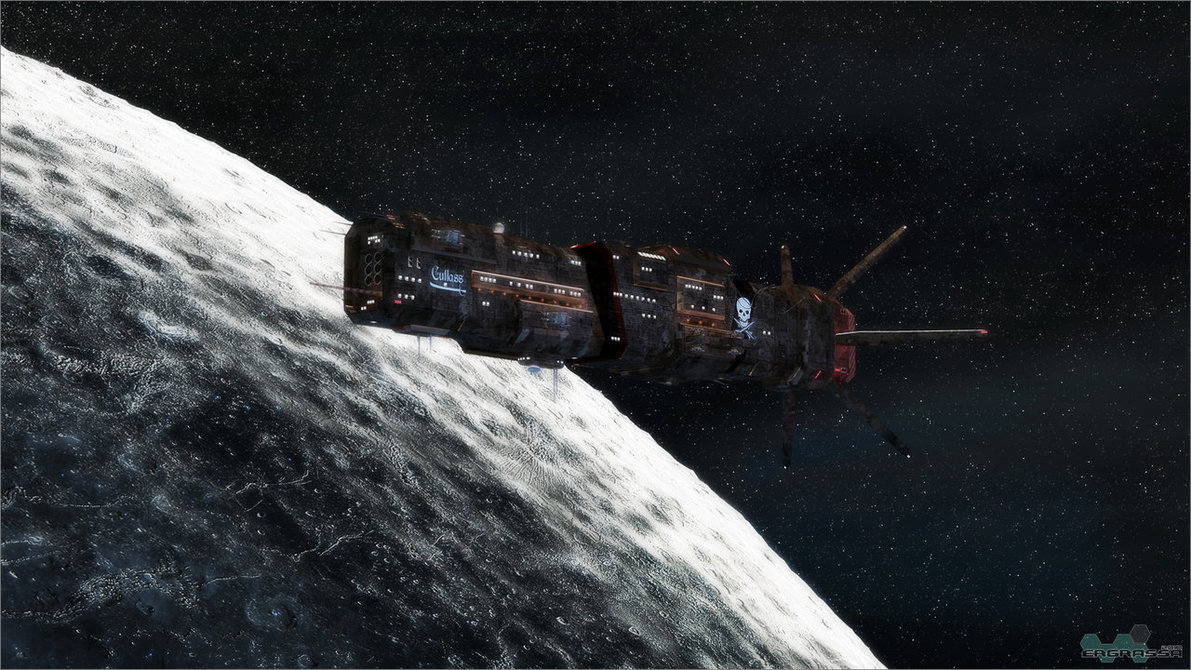
Here it is, the first article in my new Cascade Failure sandbox series. You'll note that I'm producing entries for individual systems long before I've even designed the sector map. Don't worry, it's deliberate. I'll be able to start constructing the map once I have an idea of how various systems relate to one another - politically, economically, militarily, etc.

Star and planetary information obtained from Star Gen and thereafter modified. The entry on the settled moon of Kut that preceeds it is all me.

More importantly (for me at least) this is my last ever blog article as a single man. As of the 28th, I'll no longer be able to call myself a bachelor.  That same day, the lass I've been calling my missus for the last four years really does get to become my missus.

I'll be back in a few days. Until then, enjoy.

KUT (Terrestrial Moon of Auqlan A-6)
Mass: 0.7 Earth Mass
Surface Gravity: 0.88 G
Surface Pressure: 0.528
Surface temperature 8.3° Celcius (-5.7° C Earth temperature)
Normal Equatorial temperature range


Night

Day
1.0° C
33.8° F
-
15.2° C
59.4° F
Min

Max
-23.6° C
-10.5° F
-
38.5° C
101.4° F

Equatorial radius: 5649.3 Km (0.89 Earth radii)
Density: 5.46 grams/cc (0.99 Earth densities)
Eccentricity of orbit: 0.036
Escape Velocity 9.9 Km/sec
Molecular weight retained 7.4 and above: N, O, CH4, NH3, H2O, Ne, N2, CO...
Axial tilt 22°
Planetary albedo 0.22
Exospheric Temperature: 1187.55° K (-85.45° C Earth temperature)
Length of year: (orbiting planet) 222.85 Earth days 283.81 Local days
Length of day: 18.85 hours
Boiling point of water: 83.4° Celcius/182.1° Fahrenheit
Hydrosphere percentage: 69.3%
Cloud cover percentage: 32.2%
Ice cover percentage: 4.3%

GAME TERMS:

Atmosphere: Breathable Mix. Air pressure lower than comfortable human norms

Temperature Range: Temperate. Somewhat colder than that found on earth at equivalent latitudes and elevation.

Biosphere: Chemical and Biological weapon releases into the upper atmosphere during the Great Calamity devestated the imported Terran biosphere. Only limited numbers of sealed biosphere facilities survived the war.Atmospheric pressure is somewhat low. Visitors are advised to wear breathing apparatus until fully acclimitised.

Human survivors have begun to repopulate the biosphere outside these facilities, but occasional construction has on occasion released fresh stores of weaponized bacterial spores into the atmosphere. Limited progress has been made towards developing new plant and animal strains resistant to these toxins although a human vaccination has been developed. Thus the remaining biosphere is very fragile. Ecological diversity remains very limited even inside controlled, sealed-environment conditions.

Surviving animal species are limited to Humans, Dogs, Cats, Goats, Rats and Cattle. Remaining plant species include several types of cereal, wheat, hops, turnips, carrots, beat-root, onions, peppers, grasses, flowering plants and apples. Some terrestrial insect life is also extant.

Population and Tech Level:
As little as 5% of the planetary population survived the Great Calamity, the majority of whom were either military or civic government personnel housed in bunkers or else agricultural scientists and farmers operating out of sealed biospheric environments.

Several hundred small farms and research facilities are scattered across the planet, clustered on the long, equatorial continent of “Myr”. The combined efforts of these facilities continue to feed and clothe the inhabitants of the three main “bunker cities” of Muscat, Abu Dhabi and Tehran. Each bunker city houses approximately 3000 inhabitants. The local farming and research sites provide the bunker cities with food and fresh water and, in return, are provided with manufactured goods and atmosphere scrubbers produced in the re-tooled bunker recycling centres using freshly mined minerals from the expanding corridors.

Hi-Tech items such as computers and modern weapons require difficult, expensive to produce components and are rare outside the cities. Perhaps the populations greatest asset is it's retention of a hi-tech skill base. Although the planetary populations grip on survival is tenuous at best, it is able to produce a small surplus of food and manufactured goods for trade with passing ships at the Tehran space-terminus.

As the only surviving bunker facility with space-port facilities, Tehran remains the “senior partner” of the three. Despite some recent tensions over trade tariffs, the three cities (though ruled by separate military junta's advised by Shi'a religious leaders) exist in a state of peaceful co-operation, despite frequent military posturing by all party's.

Note that none of the three bunker cities have anything approaching inter-planetary flight capability. A few hover-cars and air-cars remain functional, but that is all. The moon is completely dependant on foreign vessels for interplanetary trade but, due to the small amounts of surplus materials available, rarely receives more than one or two visits a year from traders.

Culture:
Settled by a consortium of Shi'a families from the Arabian Peninsular, faith remains a strong cultural bond between the three bunker-cities, who would otherwise be natural competitors. Though previously ruled in accordance with a corporate model, since the Great Calamity the former Myr corporation's security branch took control of each respective bunker. The three surviving cities each maintained a complete comm's black for several years, explaining why these three facilities survived the war where more than a dozen others did not. Contact between all three bunkers was finally established some 22 years ago. Each city has been ruled by it's own military (or "Public Safety") council since the years of silence. The three councils each send a single representative to sit in the ruins of the old Colony Capitol building (the Al Jalali) for six weeks at the beginning of every year, to discuss matters of common interest.

Gulf Arabic is the only language spoken with any frequency. Several settlers (particularly those who work at the space port) are fairly fluent in either English or Mandorin, but their numbers are few. They are reluctant to teach these languages to outsiders or even to other locals. This ensures that a handful of individuals retain a virtual monoploy on off-world trade.

The Sky from Kut:
At any given time either the Gas Giant (primary day) or the distant sun (night) or several moons (twilight) are visible in the sky of Kut. With more than fifteen other moons orbiting the gas giant however, reflective light is persistent. Even during the “night” cycle, light levels rarely fall below what would be considered twilight on earth.

Outside Relations:
Kut is an isolated world on the fringes of known human space. Other than the infrequent arrival of a few trade vessels from nearby worlds and supply ships from the S.S Ascendant Aurora, it has had no off-world contact of note since the Great Calamity.

Imports:
Medical Supplies, Seed Grain, Building Materials, Power Packs, Electronics, Tools

Exports: 
Food. Small quantities of muniitions.

Travel Advisory:
Due to the extreme number of moons and the influence of the gas giant itself, sea travel (or indeed, travel in coastal areas) is to be avoided. Tidal activity is unpredictable at best and suge tides of up to a kilometre in height are not unknown in some coastal areas. Finally, those who insist on sea-travel should be advised that the waterways remain full of biological sludge and waste from the Great Calamity. Engine failure on surface vessles due to clogged intakes is a common hazard.


Auqlan A
6 Planets (size proportional to Sqrt(Radius))


Stellar characteristics
Stellar mass
1.09 solar masses
Stellar luminosity
1.60
Age
4.079 billion years
(2.733 billion left on main sequence)
Habitable ecosphere radius
1.265 AU (1.029 - 1.826 AU)


Planetary Overview
#
Type
Dist.
Mass
Radius
Rock
0.319 AU
0.074 EM
0.423 ER
Rock
0.426 AU
0.205 EM
0.594 ER
Rock
0.665 AU
0.029 EM
0.312 ER
Venusian
0.763 AU
1.044 EM
1.014 ER
Sub-Jovian
1.347 AU
0.019 JM - 5.926 EM
2.806 ER
Jovian
2.617 AU
0.949 JM - 301.811 EM
9.332 ER


Auqlan A-1 (Wasqah)
Planet type
Rock
Resonant Spin Locked
Low-G, Hot, Airless, 1-Face
Distance from primary star
4.8E+07 KM
0.319 AU
Mass
4.4E+23Kg
0.1 Earth masses
Surface gravity
402.8 cm/sec2
0.41 Earth gees
Surface pressure
0 millibars
0.000 Earth atmospheres
Surface temperature
261.6° Celcius
502.8° Fahrenheit
+247.6° C Earth temperature
+445.6° F Earth temperature
Normal temperature range


Night

Day
-162.0° C
-259.5° F
-
479.3° C
894.7° F
Min

Max
-176.8° C
-286.3° F
-
483.3° C
902.0° F
Equatorial radius
2697.7 Km
0.42 Earth radii
Density
5.34 grams/cc
0.97 Earth densities
Eccentricity of orbit
0.169

Escape Velocity
4.7 Km/sec

Molecular weight retained
570.1 and above

Axial tilt
12°

Planetary albedo
0.07

Exospheric Temperature
20050.77° K
+18777.77° C Earth temperature
Length of year
62.95 Earth days
1.41 Local days
Length of day
1074.10 hours

Boiling point of water
-273.1° Celcius
-459.7° Fahrenheit

Hydrosphere percentage
0.0

Cloud cover percentage
0.0

Ice cover percentage
0.0


Auqlan A-2 (Hartum)
Planet type
Rock
Tidally Locked 1 Face
Low-G, Hot, Airless, 1-Face
Distance from primary star
6.4E+07 KM
0.426 AU
Mass
1.2E+24Kg
0.2 Earth masses
Surface gravity
569.3 cm/sec2
0.58 Earth gees
Surface pressure
0 millibars
0.000 Earth atmospheres
Surface temperature
189.2° Celcius
372.6° Fahrenheit
+175.2° C Earth temperature
+315.4° F Earth temperature
Normal temperature range


Min

Max
-206.7° C
-340.0° F
-
396.3° C
745.3° F
Equatorial radius
3790.5 Km
0.59 Earth radii
Density
5.37 grams/cc
0.97 Earth densities
Eccentricity of orbit
0.006

Escape Velocity
6.6 Km/sec

Molecular weight retained
160.5 and above

Axial tilt
23°

Planetary albedo
0.07

Exospheric Temperature
11212.46° K
+9939.46° C Earth temperature
Length of year
97.35 Earth days
1.00 Local days
Length of day
2336.31 hours

Boiling point of water
-273.1° Celcius
-459.7° Fahrenheit

Hydrosphere percentage
0.0

Cloud cover percentage
0.0

Ice cover percentage
0.0


Auqlan A-3 (Dahilah)
Planet type
Rock
Tidally Locked 1 Face
Low-G, Hot, Airless, 1-Face
Distance from primary star
9.9E+07 KM
0.665 AU
Mass
1.8E+23Kg
0.0 Earth masses
Surface gravity
296.1 cm/sec2
0.30 Earth gees
Surface pressure
0 millibars
0.000 Earth atmospheres
Surface temperature
97.1° Celcius
206.7° Fahrenheit
+83.1° C Earth temperature
+149.5° F Earth temperature
Normal temperature range


Min

Max
-225.6° C
-374.1° F
-
282.2° C
539.9° F
Equatorial radius
1988.8 Km
0.31 Earth radii
Density
5.33 grams/cc
0.97 Earth densities
Eccentricity of orbit
0.005

Escape Velocity
3.4 Km/sec

Molecular weight retained
241.8 and above

Axial tilt
28°

Planetary albedo
0.07

Exospheric Temperature
4607.38° K
+3334.38° C Earth temperature
Length of year
189.67 Earth days
1.00 Local days
Length of day
4552.15 hours

Boiling point of water
-273.1° Celcius
-459.7° Fahrenheit

Hydrosphere percentage
0.0

Cloud cover percentage
0.0

Ice cover percentage
0.0


Auqlan A-4 (Qina)
Planet type
Venusian
Hot, Arid, Cloudy, Boiling ocean, Unbreathably thick atmosphere
Distance from primary star
1.1E+08 KM
0.763 AU
Mass
6.2E+24Kg
1.0 Earth masses
Surface gravity
995.2 cm/sec2
1.01 Earth gees
Surface pressure
141897 millibars
140.041 Earth atmospheres
Surface temperature
918.0° Celcius
1684.4° Fahrenheit
+904.0° C Earth temperature
+1627.2° F Earth temperature
+787.0° C greenhouse effect (GH)
Normal temperature range


Min

Max
907.5° C
1665.5° F
-
918.8° C
1685.9° F
Equatorial radius
6469.3 Km
1 Earth radii
Density
5.50 grams/cc
1 Earth densities
Eccentricity of orbit
0.053

Escape Velocity
11.3 Km/sec

Molecular weight retained
16.9 and above
NH3, H2O, Ne, N2, CO, NO, O2, H2S...
Axial tilt
28°

Planetary albedo
0.52

Exospheric Temperature
3494.87° K
+2221.87° C Earth temperature
Length of year
233.36 Earth days
269.73 Local days
Length of day
20.76 hours

Boiling point of water
315.1° Celcius
599.2° Fahrenheit

Hydrosphere percentage
0.0

Cloud cover percentage
100.0

Ice cover percentage
0.0


Auqlan A-5 (Rana)
Planet type
Sub-Jovian
Distance from primary star
2E+08 KM
1.347 AU
Mass
3.5E+25Kg
5.9 Earth masses
0.0 Jovian masses
72.0% dust, 28.0% gas
Equatorial radius
17895.6 Km
2.8 Earth radii
Density
1.48 grams/cc
0.27 Earth densities
Eccentricity of orbit
0.151

Escape Velocity
16.3 Km/sec

Molecular weight retained
2.6 and above
He, N, O, CH4, NH3, H2O, Ne, N2...
Axial tilt
21°

Planetary albedo
0.54

Exospheric Temperature
1122.03° K
-150.97° C Earth temperature
Length of year
547.13 Earth days
871.75 Local days
1.50 Earth years
Length of day
15.06 hours


Auqlan A-6 (Ganin)
Planet type
Jovian
Distance from primary star
3.9E+08 KM
2.617 AU
Mass
1.8E+27Kg
301.8 Earth masses
0.9 Jovian masses
10.8% dust, 89.2% gas
Equatorial radius
59517.6 Km
9.3 Earth radii
Density
2.04 grams/cc
0.37 Earth densities
Eccentricity of orbit
0.246

Escape Velocity
63.6 Km/sec

Molecular weight retained
0.1 and above
H, H2, He, N, O, CH4, NH3, H2O...
Axial tilt
24°

Planetary albedo
0.55

Exospheric Temperature
297.29° K
-975.71° C Earth temperature
Length of year
1480.91 Earth days
5068.88 Local days
4.05 Earth years
Length of day
7.01 hours


Monday, 25 April 2011

Cascade Failure Public Beta: A Review

Cascade Failure: the new OSR sci-fi beta from Greg Christopher of Dark Horse Games (downloadable FREE here). Now at the top of my “to play” list and well worth a look. While the current release is merely the first “beta' version and has a long way to go before becoming a fully rounded, finished product, it already promises to become a real gem of a sci-fi game.

The first factor that sets this game apart from it's competitors is it phenomenal and highly evocative artwork, which easily captures the sense of a post-collapse high-tech society on the brink of utter catastrophe. While the artwork alone is reason enough to give this game a look, and sets a high bar indeed for expectations of quality, the rules system itself more than lives up to the promise of the artwork.

Character creation follows the standard D&D format, but with a wider range of classes available than normally appear in OSR D&D science-fiction adaptations: that is, beyond the usual tech, solider and psychic class options. With eight classes to choose from (including a variety of tech and combat specialists and two psychic classes) each with their own distinct class abilities and team niches, ample options exist to differentiate one character from another. This diversity of choice is further supported by the ability to acquire 'Gifts' for your character as they progress in level (one of the few 3rd ed D&D developments that I ever actually rather liked). Thereby ensuring that no two soldiers, outlaws or slicers need ever be mechanically the same.

Racial options are also attractive, with some of the best (and simplest) rules depicting A.I (“Droid”) characters that I have seen in recent years. The Alien species presented as PC races in the beta are also excellent, featuring outstanding racial descriptions and traits that (for the most-part) will help players portray a true alien psychology as opposed to the all too common “man in a rubber suit syndrome”. No “space-elves” or 'space-dwarfs' for us here, though one or two races have similar elements of psychology or culture in their make-up.

Like many D&D clones Cascade Failure includes an alignment system, but one less restrictive than that found in many systems. Combat, on the other hand, uses an ascending AC system designed to represent how difficult it is to injure a target rather than to actually hit it. The injury system is an elegant and surprisingly obvious way of balancing the traditional acquisition of more hit points per level with the deadliness of science-fiction weapons. As with the old D20 Star Wars system (which Cascade Failure improves upon) hit points do not represent how much injury a person can withstand but rather how good they are at dodging out the way. Hit Point damage reflects a combination of near misses with bruises, aches and physical fatigue acquired from close calls and throwing ones-self about the place to avoid been hit. As any modern soldier will tell you, it's more difficult to score an effective hit on an experienced opponent in ranged (or for that matter, melee combat) because they make better use of cover and are generally more willing to inflict bruises and minor injuries on themselves by diving onto rubble and throwing themselves about the place than a novice is.

Where Cascade Failure improves upon the old Star Wars injury system is that, rather than losing 'wound points' after reaching zero hit points, in Cascade Failure you begin to take ability damage. This reflects the character taking a serious wound (or wounds) that would normally put him out of action. This temporary ability damage can be recovered with successful medical treatment, but a time window exists beyond which medical treatment would prove ineffective and the ability loss becomes permanent. Droids take damage in the same way as organic characters except that the ability damage is never permanent and can always be repaired when sufficient spare parts are available.

Like any beta, the existing version of cascade failure does have it's flaws. There are the usual handful of rules omissions that slip through proofreading that can be fixed with the application of house rules or a little common sense until the next version is released (or until they are officially errata'd). Likewise, the present vehicle and starship rules are sparse to the point of being non-existent (I'll be using the ones from Stars Without Number until the ones for Cascade Failure and properly developed).

The (optional) setting material provided, is first rate,with a number of intriguing factions and alien races provided. The default setting (of which the artwork is highly evocative) is of a post-collapse hi-tech society with a failed economy and a growing scarcity of resources ranging from population-base to hi-tech skills and materials. However, while the rules system supports this setting extremely well, the rules themselves are highly adaptable. I was immediately struck by how easily the rules could be applied to such diverse campaign settings as the Firefly, Babylon 5, Star Wars, Aliens, Mass Effect and even Terminator universes. Or any other setting (home-brew or otherwise) for that matter.

If the beta is anything to go by (and believe me when I tell you that it is) then the full version of Cascade Failure is set to be an absolute gem of a rules system. I already intend to start a new game using it (I'm already working on a sector-scale sandbox and background storyline) and that is the highest complement for a rules system I know. True, there are gaps in the present rule-set, some glaringly obvious ones even (such as the aforementioned virtual absence of starship/vehicle combat rules). But, even with-out the presence of working vehicle rules, there's enough rules material and setting information contained within this 88 page beta to make for a very exiting, very enjoyable and, indeed, very playable sci-fi retroclone. I can't begin to tell you how excited I am by this product.

Look out for an actual-play report  and some sand-box articles soon.

Dangerous Rating: 8.5 out of 10.

Note: The Artwork used in this review was been donated to Dark Horse Games by the respective Artists for use in the Public Beta. The art has been reproduced here without permission.

Sunday, 24 April 2011

Zama: The Drune

Overview:

The Drune are a grey-skinned primitive race of savage humans residing in the Underworld. The Drune were once of the Tuatha, human worshippers of the Elven Ever-Queen, who fell into darkness and despair during the first Dark-Rise and thereafter pledged their souls to the service of the Dark. The Drune plot, gather and breed in the Underworld beneath the Middle Sea, carving out an Empire amidst the ghosts and undead of the dark caverns beneath the world of the living. With infernal patience they plot only one thing: the return of the Scourge to the world, bringing about a third dark-rise, and the destruction of all living things.

A warrior society led by demon-summoning Witch-Queens, the Drune gather in great numbers to- against all expectations of a death-loving people, fornicate- fight and revel. That they are mighty in numbers is certain to all those recognise their existence as more than mere myth. Why they yet wait patiently beneath the earth, rather than waging bloody war against the day-dwellers, remains one of the great mysteries of the Underowlrd.

The Drune are a violent people, placing no great value on any life other than their own, and who yet seemingly strive to fulfill their own earthly desires in every respect. Strength and a certain tolerance to pain are highly regarded throughout Drune tribal society, with the greatest warriors, priests and most successful child-bearing mothers marked by many scars and ritual tattoo's proclaiming their great prowess.

Though each tribe is commanded by it's own Drune Mother (A Druidess or Witch) and led into battle by its' Drune Priests, traditional human concepts of gender role do not exist beyond these two roles. A Drune war-chief is as likely to be female as male, and a Drune shaman or witch may be of either sex.

Drune Religion and Culture:

As well as The Scourge (whom the Drune know as the "Dark Mother') the Drune also worship certain demon lords. All are either explicitly allied with the Scourge (at least according to Drune Lore) or are said to share certain goals (Slough Feg, lord of maggots and decay is one such mighty demon lord). Drune armies consist of every man woman and child in the tribe -all living Drune are expected to fight when the tribe goes to war.

All Drune hold each others lives (even those of their children or siblings) as worthless while placing great value on their own. This high value placed on their lives might lead one to suspect that the Drune are cowards at heart, yet they fanatically embrace death as the ultimate form of union with the Dark Mother. Each Drune death, they believe, helping to bring about her triumphant return to wreath the world in darkness and decay. Rather than fearing death, each Drune merely seeks to embrace and experience as much of life as possible before that inevitable last sleep, when they are thrown into the tribes death-pits for their corrupt, earthly form to be feasted upon by maggots and carrion.

These death pits are also the favoured form of execution and sacrifice for prisoners captured in "war' against other tribes or in the infrequent surface raids (especially against the Tuatha) for new "breeding stock". The best of this breeding stock goes to improve the stock of the tribe itself, where the new stock might be mated to many different partners. The Drune have no concept of monogamy. Each Drune ruts with whichever other being -Drune or otherwise- catches their particular fancy. Though most Drune females are careful to avoid rutting with Cauldron-born -unless they wish to endure a particularly painful and grizzly means of achieving their final 'union' with the Dark Mother.

Drune Appearance:
Drune men are massive and bulky, veritable giants among men. Drune women however, are lithesome and svelte as vipers, dangerously (usually fatally) attractive to males of any humanoid race. It is hard to mistake a Drune man for anything but, what with their heavy facial scarring, tattoos and many piercings of bone and horn. Drune women, on the other hand, are more subtle in their physical variations from the human norm. Though they share the same, matt grey skin tone as the men, Drune woman do not scar or tattoo themselves as extensively. Instead, they tend to paint their lithe and seductive forms in a  variety of (often toxic) dyes, changing the design and pigments as the whim takes them. With their mastery of poisons, lotions and body paint, Drune woman are more than capable of disguising their unusual skin tones and make fearsomely effective spies. Any Drune encounter on the surface world (save for that with a full war-band) is likely to be with a lone female spy or small band of female scouts. Rumours of fierce "amazons" among the "Dark-Blind" surface worlders may be nothing more than the confused tales of terrified male survivors of such encounters. Such survivors -unless especially pleasing to their captors- are often permanently maimed by the fierce Drune females, but only after the women have their wicked -and all too painful- way with them.


Drune Women:
All the more fearsome and decidedly more evil and sadistic even than their men, Drune women delight in torture and bloodshed and exult in combining both of these "hobbies" with the practice of ritual sex and blood magics. Females think nothing of torturing themselves and even their own children in order to test the "strength' of their bloodlines. Like all Drune, Drune women train for battle and bloodshed. But whereas Drune men are huge and bulky warriors who trade blow for blow and sweep all foes before them, Drune women fight as skirmishers and light infantry.

Drune women excel in the use of daggers, javelins and other thin blades, often coated by painful poisons that cause paralysis (but not loss of sensation) rather than death. Not from any sense of mercy, but in order to better prolong the victims agonies.

Drune women also learn the arts of healing, but make no effort to counteract the effects of pain. Drune healing is as much about keeping captured prisoners alive for longer than it as about tending the torn, wounded flesh of Drune Warriors.

To a Drune, a wounded warrior or ill child will either recover or die on its own. It is this complete lack of the "mothering instinct' that makes Drune women so horrific in the eyes of civilised women, such as the matriarchal, female dominated society of Zama.

Drune At War:
A Drune horde on the warpath is a terror to behold. One that few disciplined armies can stand against without powerful magical support. That the Drune have not yet massed in great numbers to attack the surface world is a mystery beyond the reason of the wisest surface sages. Yet those who know of these terrifying beings are grateful that this remains the case.

Drune armies go into battle accompanied by the unquiet dead of the Underworld in all their forms, from soul-devouring monstrosities such as the Bodak to the reanimated remains of defeated foes. Their warriors forgo armour, shunning all forms of protection save for massive, fully enclosed helms. These helms are often decorated with demon horns with which to terrify their foes. Drune cavalry ride massive, demon-blooded horses that trail fiery from their eyes and whose hooves burn and sear the very stones of the earth they tread upon. Their warriors carry magically strengthened stone axes, arrows and spears into battle, often fighting alongside demons and in an uneasy alliance with allied tribes of Cauldron Born. These Orlocs, summoned by Drune Mothers, are born to an obedience that transcends their otherwise legendary libidinous lusts through strange and oft times brutal blood magics.

The tribes make war on one another only infrequently, preferring to war against the undead kingdoms of the Underworld. Even on those rare occasions when Dune tribes do fight amoung themselves the conflict is a highly ritualised affair; with weapons, numbers and even rules of engagement and time-limits agreed by the respective Drune Mothers before-hand. This strangely ordered attitude carries forward into the recreational internal tribal sports of the Drune, in which fatalities are common and the commander of the winning side sacrificed to the Dark Mother (as the Drune call the "Scourge") as a reward for his skill and faithful service.

Games Notes: The Drune are human characters (almost all of whom have heroic characters levels - mostly barbarian, assassin, druid, rogue or ranger) with the addition of the Dark Vision ability. if you're using the #rd or 4th ed rules, then a high proportion of characters have demonic blood and count as Teiflings or Cambions. Add Warlocks and Avenger (in 4th ed) to the list of common classes. Low physical stats are uncommon to the point of rarity due to their harsh up-bringing and a tendency to through sickly children into the worm-pits to die.

Inspiration for the Drune comes from the evil faction of the same name in the 2000AD comic and the Wendol as depicted in the movie "13th Warrior."Add in a healthy dose of S&M and Drow Paranoia, and you have the Drune of Zama.

Edit:
Development Notes: I created the Drune because I felt the need for an "Underdark' race that represented a foe as evil, devious and downright murderous as the Drow. However, I already had a surface dwelling race of "dark-elves" based closely on the legends of the Unsidhe and the Drow themselves were just so wrong for this particular game world. I wracked my brains for a while and, after picking up an old copy of 2000AD, hit upon the idea of adding the Drune to the game world.

Saturday, 23 April 2011

Zama: Cauldron Born

Overview:

The Cauldron Born: Orlocs to those who have faced them in battle. Each a tiny spark of the foul entity known as the Scourge. Each one brought into the world or slain by brave heroes brings the next Dark-Rise a little closer to the world. Yet not to kill them, is too allow rampant, monstrous evil to thrive and grow in the lands of the Middle Sea.


In ancient times, the Eladarin and the Tuatha knew them as the Fomori, the Sea Devils, for they came from lands beneath the sea. From the cauldrons of Sea Hags and Shark-Men to ravage the forest kingdoms of the Elven Isles (what mean known call Alba). Though beaten off in their early incursions, the deaths of so many such creatures, each carrying a tiny taint, allowed the Scourge to manifest itself upon the world, only to be defeated and thrust back to hell by the sacrifice of the Ever King, who consigned himself to burn in holy flames forever. (The information in this last paragraph is not general lore except among the Forsaken and the Eladrin, being unknown even to scholars of the other races).

Most terrifying of all, Orlocs are not born: they are made. In dark, alchemical cauldrons deep in the lair of monsters, witches, hags and warlocks, foul concoctions bubble into which the corpses of men, women and elves slain by violence are thrown, only to re-emerge mere hours later as full grown Orlocs of one sort or another. Ready to fight and kill for their new 'masters' -until such time as the Scourge calls them forth again.

These creatures seem both soulless and utterly fearless in battle (in game terms they never test  morale) unless commanded to retreat or withdraw by their summoners (prudent summoners instruct their guards to retreat when a certain number of losses have been sustained). Yet in other circumstances, such as when sacking a city, they are known to enter into a great frenzy. Though the cauldron-born cannot breed with one another, they can certainly produce more of their race through acts of procreation with (most of the rape of)  females of other species. In this matter alone, the drive for procreation, are the Orloc's summoners unable to control them. And once the drive to procreate has begun it can be difficult to stop. Many a Cauldron-Master has fallen victim to his own creations when attempting to prevent a mating -if only because the Cauldron Master knows that, while his own creations are fanatically loyal to his every whim and command, subsequent generations created through more "traditional' means are not so inclined.

The gestation period following such acts is terrifyingly quick ( a few weeks at most) and invariably kills the mother, giving birth to anywhere from three to a dozen tiny little miniature cauldron born who claw their way from the mothers belly and devour her. The strongest infants thereafter kill their siblings unless more meat is available and then slink away to find somewhere to gestate inside pod-like cocoons for a matter of days. Whereafter a fully grown Orloc emerges from the slime.

In this manner a conquering horde of Orlocs can grow to alarming proportions remarkably quickly. A force large enough to sack a village can, after only a few weeks and a mere handful of successful attacks, quickly swell to sufficient strength to sack a town. Hence the speed of response and great alarm caused when armies of the things crop up here and there around the countryside. Even the siting of a single such beast can call whole armies to arms, for such an infestation must be stopped dead before it has time to gain momentum.

Orlocs are not known to die from any means save violence. Disturbingly, even for those who have experienced such events before, when the death blow is struck an Orloc emits an eerie high pitched scream that can be heard for miles (alerting its nearby brethren to danger) and becomes suffused in a green light that seems to emanate from every pour or orifice, like a beacon. This is a light visible for miles on a clear night, and for several hundred yards even during the brightest day. Scholars believe that this is nothing less than a visible manifestation of the Scourge share being released from the dying beast, free to seek out other shards and gather to work it's evil upon the world once more.

Game Rules: Strictly speaking Orlocs are not undead -they have been reborn into new bodies, with a new 'soul' -or rather a small fragement of one immense, giant, alien soul that desires the eradication of all life from the material plane. In game terms they count as normal orcs, goblins, or whatever, with a default morale of fanatical and a minimum of half the maximum possible hit points for their type. Oh, they will try to capture -rather than kill- female characters. They will try very, very hard indeed. To the extent that they will pursue a band with at least one female character for weeks if neccessary -or until another, more defenceless female catches their eye.

Note: The tendancy of these creatures to go berserk with lust at the sight of a female of reprodutcive age does not, strangely, seem to apply to their summoners. Indeed, on those rare occasions when a Cauldron-born has mated with a (willing) female summoner, the result has been the natural birth of those rarest of creatures: a half-orc.


Goblins:

Gestated from the bodies of small, murdered children or (in far rarer cases) from the bodies of halflings, gnomes or other small Fae. Goblins are swift, sneaky and murderous. The advance scouts and archers of an Orloc force, they above all others are likely to demonstrate small acts of rebellion towards their summoners, twisting their order to follow the letter but not the spirit (or vice versa) or else leave small indications of their presence nearby (small, tortured animals and birds) in the hope of luring 'breeding stock' to their lairs.
Goblins stand approximately three to four feet tall, are more intelligent (or rather cunning) than their taller, stronger brethren, and more prone to acts of sadisitic savagery from sheer boredom.
They are usually the first to break the metaphorical chains binding them to their summoner. Like all Cauldron-Born, their eyes are suffused with an eerie green glow (not shown in picture). Like their hobgoblin brethren, they tend towards orange, rather than green, skin. However, greenish skin tones are not unknown.

Hobgoblins: 

Hobgoblins are the transformed remains of adult or adolesent humans and similarly sized, non-fey creatures. more ordered and disciplined than Goblins, they are more apt to obey orders and more inclined to use their own initiative. Like all Orlocs (whether true cauldron-born or from later generations) they are fearless in battle. Though not as cunning as their lesser goblin brethren, they seem to be capable of tactical thought and co-operation. While goblins fight as individuals, unless specifically ordered not to, Hobgoblins instinctively gather together to forms ranks, mobs and warbands and take to more discliplined fighting styles with little training.
Like all Orlocs, they possess eerie, glowing green eyes. They stand man-tall and, though all are male, some possess a more feminine shape - a legacy, perhaps, of the corpse from which they were transformed. Hobgoblins possess orange skin tones.

Orcs:

According to the tales of Elves, while Orcs were once the most common form of Orloc, they have dwindled in numbers to be greatly eclipsed by the hordes of goblins and hobgoblins that now periodically swarm across the land. Said to be born from the corpses of Eladrin, Forsaken and other man-sized fey, if the hobgoblins and goblins are a twisted reflection of the inner evil within every human then it follows that, as reflections of the creulty inherant within each living fey, that orcs should  -and indeed do- far exceed their brethren in the monstrousness of their form. Some scholars believe that certain orcs -those of a more aquatic appearance- are developed from the corpses of Shark-Men, Merfolk, Sea-Fey and other legendary beings that exist below the waves.
Duller and seemingly more stupid than their goblinoid cousins, Orcs are fractious and prone to self-destructive acts, as though some small part of the original; fey soul survives and wishes to bring about it's own destruction. Doubtless, not from any concern with regards to what it's newer, baser form might do in pursuit of it's lusts, but from sheer horrow at the ugliness of it's new form. Eladrin scholars believe that, with the Orcish Cauldron-born at least, the Scourge permits some small vestige of the original soul to remain, if only to more intensely savour the torment and degredation of the lost soul's condition.
Orcs tend to be large, brutish and malformed in some way (evil eye, oversized limb, undersized limbs, hideous warts, hideous stench etc). They also tend to be green skinned.

Fomorian Giant:

The rarest of all Orlocs, the Fomorian Giants appear much the same as orcs, save many, many feet taller. Most are grown from the corpses of Firbolg (or were, in ancient times at least) but others are born from murdered or slaughtered giants and ogres of all types.
Similar in appearance to their orcish brethren, they are, if anything, even more malformed than their smaller, orcish brethren.

Edit:
Development Notes: The Cauldron-Born are a very recent addition to the Zama setting. For years, despite the nagging of my players and my own conscience, I refused to have tolkein-esque non-human races on Zama. Even faeries and giants were rare -almost unique- in the game world, and followed traditional mytholigical, rather than D&D-style, themes. Until, that was, I saw the Immortals in the movie 300. At which point I reluctantly allowed the players to convince me that humanoids could be added to the setting. To this day, I'm still not 100% happy with their inclusion. At any moment, I might decide to write them out of the worlds history altogether, or, at the very least, come up with a way to make them extinct.

Friday, 22 April 2011

Zama: The Bronze Legions


Known as the Bronze Legions, the Army of Zama represent the finest disciplined fighting force the lands of the Middle Sea have ever known. Though heavily outnumbered, time-and-again this mighty force has beaten back the fiercesome Mantis Legions of the Arcane Imperium. Were they not governed by the all-encompassing constitution of the Protectorate of Zama, a constituion that forbids the Bronze Legions from taking the field in a war of aggression, they could indeed have conquered the world.

At the core of this mighty armed force lies the Sacred Band, a body of professional soldiery recruited from every city of the protectorate, yet only from those of true Pheonixian blood. The 13,000 men selected to serve and die in the selected band are conscripts, recruited on pain of sacrifice. Yet to call this a conscript army is perhaps a disservice. Zaman boys at their childhood battle drills dream of donning the purple cloak and rune-encrusted bronze of the Sacred Band. An honour that, in nearly two thousand years of recorded history, none so-chosen have ever refused.

To join the Sacred Band is to be elevated to the ranks of a noble brotherhood, a warrior-society without equal in all the world. For while the professional warriors of other lands and cultures often die in training, none-so-many die in the attempt as those who seek to join the Sacred Band.

Always 13,000 strong, the Sacred band recruit from those who have attended and trained at the Dogi, the most brutal and effective warrior academy in all the Known World. From the age of twelve the conscript cadets, none of whom are ever addressed by their real name, but merely by a coded series of numbers of letters, strive to prove themselves worthy of the honour they have been selected for. Only in times of great calamity, when the Band's numbers have been depleted too badly for the graduating soldiers of the Dogi to fill the ranks are adult soldiers, the elite of other Zaman fighting men, admitted to this sacred religious order.

For the Sacred Band are not just soldiers. They are a warrior and religious elite, the Temple and Palace Guards of the Holy City of Zama and the Queen herself, a direct descendant of the Goddess Tanith.

Promotion within the ranks of the Sacred Band is earned by merit, not birth. Yet the Dogi is not a school of reading, writing or history. It is a school of war. And therefore, only those supplicants with the best educations prior to joining the Dogi, specifically those from rich or noble houses, ever rise to high rank. The sole exception is the Prince Archon, the Champion of Zama and leader of it's armies. The Prince Archon is chosen, by the Queen, to be her representative on the battlefield. She may chose any man for this task -but with two restrictions. He must be a member of her family, and he must be acclaimed by the man of the Band.
The current Prince Archon, Hamilcar, the Queen's Brother, has only recently come to replace her husband in this role. Yet even prior to his ascension his name has been legend. The Commander of the Blood Gates, the sole Pass into the lands of the Protectorate from the territory of the Arcane Imperium, he has already led the armies of Zama to Victory in eleven battles, and has been prophesied to lead them in many more. The Prince-Archon holds a place in the Zaman heart and the Zaman religion second only to that of the Queen herself. For just as Zama's Queen is the heart of the Goddess Tanith, so Zama's Archon-Prince is the mortal swords of it's Gods.

8000 men of the Sacred band fight as heavy infantry, forming phalanxes in battle armed either with long pikes or heavy spears, short swords and great, heavy round shields. Encased in rune-enchanted bronze chest-pieces, greaves and helms and wearing their mighty purple war-cloaks, they are the finest heavy infantry in the world. As immovable as a mountain.

Another 2,000 men of the Sacred Band, those afforded as they very best, ride into battle atop mighty warhorses. Known as the Companions, they fight equally well afoot as mounted and serve as the bodyguard and battle-companions of the Archon-Champion himself.

Last among the Sacred Band are the 3000 men who serve as Marines to man the mighty war-ships of the fleet, ten marines to a vessel. Though the ships of other navies might augment their rowers with as many as 40 to 100 marines, the men of the Sacred Band are no mere mortals. They go into battle even as sea in their heavy-bronze armour and long spears, allowing ten men to match against forty or fifty lighter armed marines of other nations. Unlike these other marines, who are expected to board and capture a ship, it is the task of the Sacred band merely to defend their own ship from boarders. The navy of Zama has no need to capture the inferior ships of enemy nations, preferring to send them to the bottom of the sea. Thus, the marines need only defend the narrow prow of a Zaman ship until it's ram is withdrawn, whereupon the enemy vessel sinks swiftly beneath the ways.

 Zama’s navy consists of 250 fast quinqrimes and quadrimes augmented by about 50 tiremes act as scouts and messengers rather than warships. The ships of the Bronze Legion are crewed by well paid sailors recruited from Zaman families and accompanied into battle brothers of the Sacred band. In the face of the Arcane ImperiumsZaman sailors belong to the Peoni and don their armour and weapons before entering battle, heedless of the dangers of drowning. 


Though mighty indeed, the veteran warriors of the Sacred Band are few indeed, and this go into battle backed by Citizen Conscripts (the Peoni) and Mercenary Infantry.

In the nation of Zama, it is the task of women to rule and men to fight. Hence the Peoni number amoung them every male citizen of fighting age in the Protectorate.

Men of the first class equip themselves as Hoplites or Cavalry, armed with weapons identical to those carried by their brothers and cousins in the sacred band, with the exception that their own weapons (but not their shields) are made of plain iron or steel. Not the enchanted bronze of the Sacred Band. The second class also arm themselves with bronze shield and iron or steel spear, but their armour is as likely to made of linen as steel or bronze. The men of the third class fight as light infantry, armed with spear, shield and short sword, trained to harry the flanks of foes attacking the phalanx and to protect the phalanx in turn. Finally, the poorest men (those unable to afford even a single slave) are expected to arm themselves as archers and javelin men. A function that carries with it little or no shame and affords the opportunity for a brave man to enrich himself through plunder.

Zama only calls out the militia of any given city when the city itself is directly threatened. Thus the Peoni, while well trained, are under-used and lack experience in war-time. Zama makes up it's battlefield numbers with thousands of mercenaries, desperate and adventuresome men drawn from all the lands of the Middle Sea. Even in peacetime Zama may have as many as 10,000 or 12,000 mercenaries in service, or as many as 100,000 in times of war. Zaman mercenaries are grouped by nationality into Companies of a thousand men, each led by a Drakos (or Colonel) drawn from the Sacred Band.Zama engenders more loyalty in it's hired soldiers than most- the outer ring of the city is named the mercenary quarter, for the many soldiers housed therin. Living so close to the city they fight and die for, many such mercenaries settle down roots, marrying local Zaman women or freed slaves, and become eventual citizens of the City-States for whom they fight and die on a regular basis. And, to further ensure the loyalty of this multitude of paid killers, Zama honours and pays it's mercenaries like no other nation in the world.

Finally, the shock troops of the Bronze Legion serve to terrify horses and men, winning battles it seems, often on their own. Each family of the Eighty, the leading houses of Zama, is required by law to maintain one war-elephant for the Protectorate.Stationed one to each of the eighty towers that line Zama's outer wall, these beasts go into battle clad in thick bronze and bearing armoured noble men of the eighty families on their back.
An almost irresistible force on the battlefield, Zama's armies know that where their war-elephants go, victory is sure to follow.

Edit:
Campaign Design Notes: As you might have guessed, the Bronze Legions are derived from the Carthaginian armies of the Punic Wars with a heavy dose of Spartan military theory and discipline thrown in. Although not all the men of Zama are trained in Spartan methods, the Sacred Band certainly are, though they start a little later in life than their real-life Spartan counterparts.

Traditionally, Carthaginian mercenaries were a lot less dependable than Zama ones, but just as Carthage had a "Mercenary War" so did Zama -although Zama learned a lot more from it's previous mistakes. Likewise, Carthaginian militia were not as effective in the later Punic War period than the Zaman's pictured here. While Carthaginian men grew soft and complacent behind their mercenary armies, the men of Zama most assuredly have not.

Jack Chick has no idea...


Some pictures really are worth a thousand words.